Technology2026-10-034 min read

Destro AI for UAE warehouses: coordinate robots and workers

Destro AI is selling the coordination layer, not another robot. For UAE warehouses and 3PLs, that points to a more practical question: can better orchestration improve an existing operation?

Destro AI for UAE warehouses: coordinate robots and workers

Destro AI coordinates robots, workers and warehouse goods

Destro AI emerged from stealth on 30 September 2026 with an $8 million seed round. Its product is an AI software layer for logistics operations. It directs robots, human workers and goods as one workflow rather than treating robot movement as a separate task. TechCrunch’s report describes two parts of the system: Vision, which uses open-weight vision-language-action models, and Mothership, which coordinates the wider operation. (techcrunch.com)

The practical example is cross-docking. Workers unload goods from one truck into different carts. The robots identify completed loads and take them to their destinations. The software gives direction across the human, the cart and the trucks, instead of leaving a person to manage each hand-off manually.

The useful product is not the robot on its own. It is the operating layer that makes the whole workflow systematic.

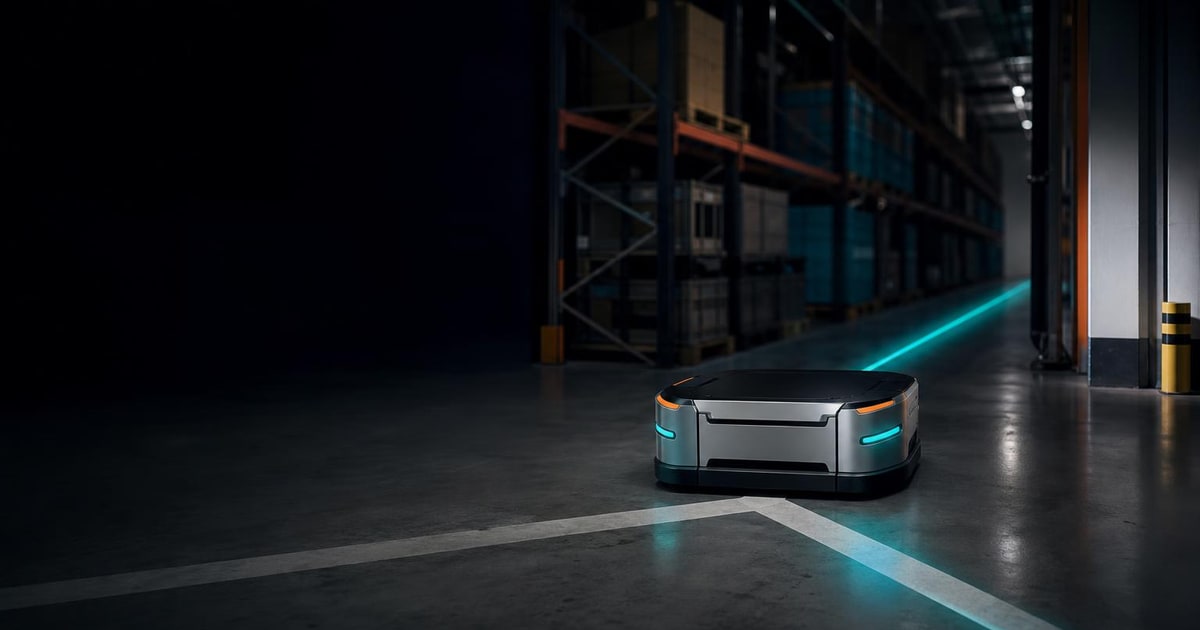
One warehouse robot waits at a clean floor junction with a teal route leading ahead.

Destro AI warehouse pilots: 3 robots, 26 robots and 17 robots

Destro began with three cart-moving robots from Miva Robotics at a Yusen Logistics facility in the Pacific Northwest. The initial operation focused on cross-docking, although Destro had first worked on picking and packing. Yusen is now expanding that deployment to 26 robots and starting another pilot with 17 robots at a facility in Southern California. (techcrunch.com)

That detail matters because it shows the proposition in a more useful way than a general claim about “AI in warehouses”. The software is being fitted around a defined operation: goods arrive, people unload them, carts fill, and loads need to move to the right place. The system is intended to reduce manual coordination and remove paper-based steps from that process.

The article also explains why two other robotics options did not fit Yusen’s workflow. One could move carts from point to point but could not manage loading or unloading. Another offered fleet management but still required a person to orchestrate the operation. Destro’s distinction is that it applies direction to the complete process.

How UAE warehouses and 3PLs can test automation

The lesson for a UAE operator is not that every facility now needs robots. It is that automation can be evaluated as a coordination problem before it becomes a hardware project.

For a warehouse, 3PL or marketplace fulfilment operator, that means asking four practical questions:

A UAE business with conveyors, sorters, carts or other equipment may not need to replace the facility to test an improvement. It could start with one repeatable flow, such as cross-docking or movement between staging areas. The sensible test is not whether the technology looks advanced. It is whether the operation becomes more consistent, easier to supervise and less dependent on manual coordination.

If the underlying problem is stock, orders and accounts being recorded in separate places, robotics may be the wrong first move. In that case, review ERP and automation for a small UAE business before considering physical automation. Paknology’s ERP and automation service is relevant to that software layer, but it is not a claim that it supplies Destro’s product or robot hardware.

  • —Which repeated hand-off causes delay or rework?
  • —Are people, carts, vehicles and orders working from the same live instruction?
  • —Can existing automation be directed by a software layer?
  • —What happens when an item, load or route does not match the expected pattern?
Destro AI evidence limits: no UAE case study, price or ROI guarantee

Destro’s results are promising, but the report is not a UAE case study, a published price list or a guarantee of return on investment. It does not establish how the system would connect to a particular warehouse platform, what implementation would cost, or how it would perform with every type of product.

There is also a clear technical limit. TechCrunch notes that more dexterous workflows involving manipulation remain difficult for generic robot bodies and open models. A system that works well for moving completed carts may not solve item picking, fragile handling or irregular packing. (techcrunch.com)

A sensible owner therefore documents the workflow first. Measure where time is lost, how often exceptions occur, and which decisions still depend on one experienced supervisor. If there is no clear, repeated bottleneck, doing nothing is a rational decision. If there is one, ask automation vendors to demonstrate that exact process with your own data and exceptions.

Where Paknology fits UAE warehouse automation

Paknology has a commercial interest in the software side of this decision. It provides ERP and automation services, so it may benefit if a UAE business needs better-connected operational systems. That does not make it the right answer for a robotics deployment. A cheaper or simpler option may be a process redesign, better stock control or a focused system upgrade rather than a new orchestration platform.

Start by mapping one warehouse workflow and the systems that touch it. If the gap is disconnected stock, orders and accounts rather than robot control, review ERP and automation options; if it is a physical robotics problem, keep the scope to a measured pilot and seek a specialist integrator.

Ready to launch, automate and scale?

Book a free consultation and get a clear roadmap — from company formation to a fully automated digital operation.