Technology2026-10-215 min read

DoorDash Air: UAE Lessons Beyond Drone Delivery

DoorDash’s new six-propeller aircraft matters less than the software and handoff systems behind it. UAE operators should study the integration layer before investing in delivery hardware.

DoorDash Air: UAE Lessons Beyond Drone Delivery

How DoorDash Air uses an autonomous delivery platform

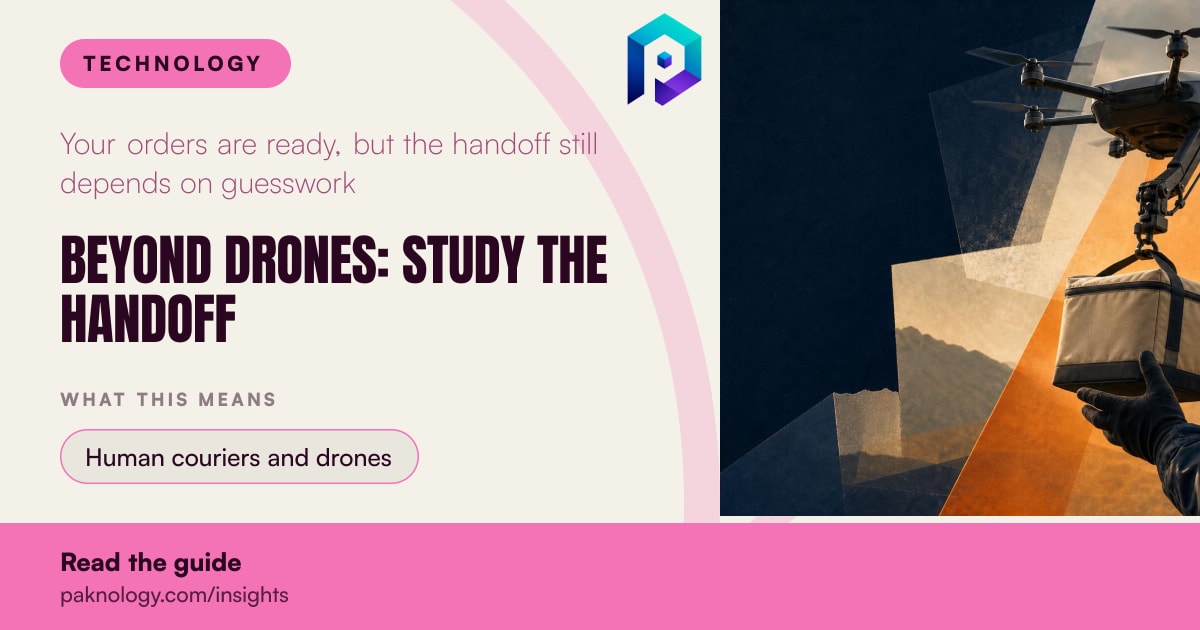
DoorDash has unveiled DoorDash Air, a purpose-built drone delivery system with six slow-spinning propellers, a winch for pickup and drop-off, and additional failsafe systems. Pilot deliveries are planned in Northern California with restaurant partners including Chipotle, Popeyes and Momo N Curry. But the bigger business development is the Autonomous Delivery Platform, or ADP, which decides whether an order should travel by a human courier, DoorDash’s Dot ground robot, a partner robot or a drone. (about.doordash.com)

DoorDash says the ADP considers factors including distance, order weight, weather, flight range, ground traffic, kitchen preparation time and delivery timing. In other words, the drone is one delivery mode inside a wider dispatch system. The platform is designed to choose the most suitable method order by order, rather than force every order into the same model. (about.doordash.com)

The real product is the decision layer that connects different delivery methods.

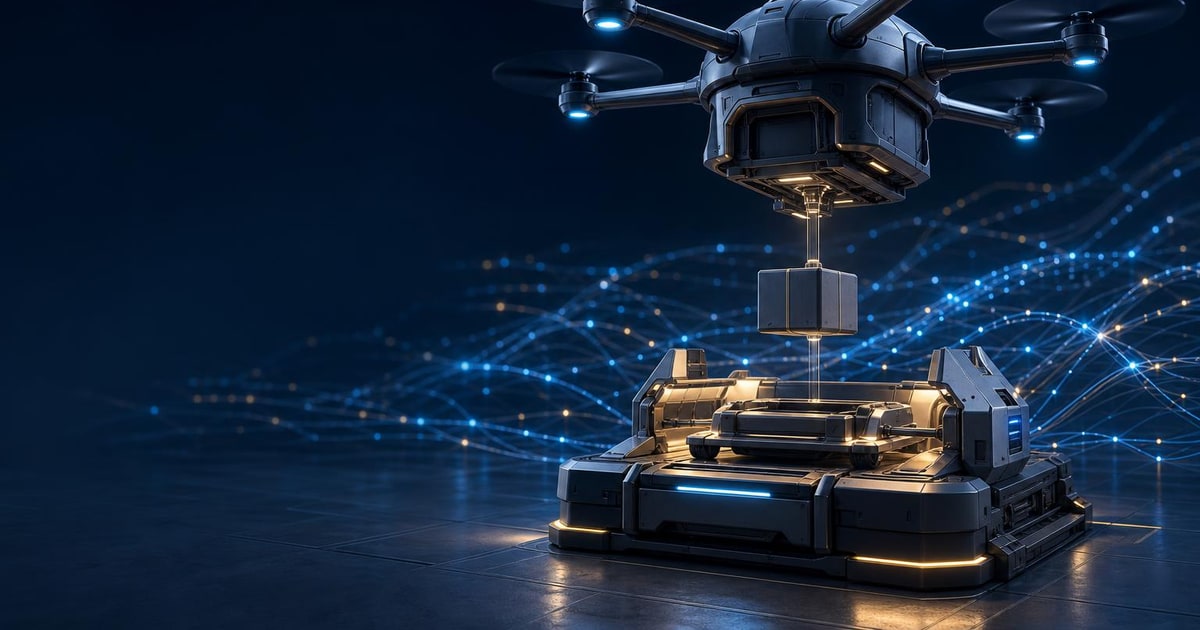
A six-propeller delivery aircraft transfers one package to an automated handoff dock while data trails recede behind it.

What UAE businesses can learn from DoorDash Air

For a UAE restaurant, grocer or local retailer, this is not a reason to buy a drone. DoorDash’s announcement does not establish a UAE rollout, and its published pilot is in Northern California. The sensible lesson is operational: future delivery networks may increasingly assign orders across several modes while keeping one customer experience and one merchant workflow.

That makes the quality of your internal data more important. A delivery platform needs accurate order contents, preparation status, weight, dimensions, collection instructions and customer location. DoorDash says it began with packaging, loading systems, kitchen handoffs and order data before designing the aircraft. It also says about 80% of typical DoorDash restaurant orders are light and small enough for its aircraft, based on limited US delivery data. That figure is not a UAE benchmark, but it shows how delivery technology is shaped by the order profile. (about.doordash.com)

A UAE business should therefore ask a more practical question: could our systems give any delivery partner a clean, current view of what is ready, what it contains and where it must go?

If the answer is no, an ERP and automation system may create more value than a new delivery gadget. For restaurants, a restaurant POS system should also keep the order, preparation and handoff information consistent rather than leaving staff to retype it between systems.

How a Dubai restaurant could use multi-mode delivery

Imagine a Dubai restaurant selling meals, drinks and grocery add-ons through several ordering channels. A human rider may remain the best option for a large family order, an apartment delivery or an address that needs a handover at reception. A ground robot could suit a short, compact trip in a controlled neighbourhood. A drone, where legally and operationally available, might suit a small order travelling a moderate distance to a suitable landing area.

The owner does not need to decide this manually. The useful model is to maintain reliable data so a delivery platform can make that decision. The restaurant needs item weights and dimensions recorded, preparation times kept realistic, packaging standardised and collection instructions made clear. If one channel says an order is ready while the kitchen is still preparing it, no aircraft or algorithm will fix the delay.

DoorDash says its ADP also coordinates kitchen preparation, delivery timing and routing in real time. That is the part UAE operators can learn from now, even if their current delivery method is still a rider on a motorbike. (about.doordash.com)

How UAE restaurants can prepare for autonomous delivery

First, map the current journey from order to handoff. Note where staff re-enter information, where stock counts disagree and where preparation times are guessed. Then standardise the fields that any future delivery partner would need: order status, item description, quantity, weight, packaging type, collection point and delivery notes.

Second, test the economics using your own orders. DoorDash reports that initial tests produced restaurant-to-door delivery in under five minutes on average, but it clearly limits that claim to a sample of US deliveries and says times are not guaranteed. Treat such figures as a technology signal, not a forecast for Dubai, Abu Dhabi or any other UAE market. (about.doordash.com)

Third, do nothing if your current problem is not delivery mode. If late orders are caused by poor stock records, slow preparation or unclear handoffs, buying into an autonomy project would simply add cost and complexity. Fix the process first.

DoorDash’s development is a useful comparison with the usual UAE setup of a merchant system plus a human delivery fleet. The emerging alternative is one orchestration layer that can allocate the right mode for each order. Businesses that keep clean operational data will be better placed to use that model if it becomes available locally.
Where Paknology fits in delivery systems

Paknology has a commercial interest where the answer involves improving the systems behind the operation. We provide ERP and automation, restaurant POS, websites and mobile apps, ecommerce launch support, digital marketing and SEO, WhatsApp Business API through Waphie, and UAE company formation and trade licences. We do not provide drones, courier fleets or aviation approvals.

If your immediate need is better order, stock or handoff data, review ERP and automation support. If your operation is already controlled and your delivery partner handles the rest, a cheaper or simpler option may be to keep the current setup and improve only the fields and procedures that are causing delays. The next step is to document the delivery workflow before choosing any new system.

Ready to launch, automate and scale?

Book a free consultation and get a clear roadmap — from company formation to a fully automated digital operation.