News2026-09-175 min read

Robotic parcel hubs: what UAE ecommerce operators can learn

Evri is testing a robotic neighbourhood parcel hub in Bristol. Here is what the model does, what it could change for UAE ecommerce operators, and the sensible next step.

Robotic parcel hubs: what UAE ecommerce operators can learn

What Evri’s Bristol robotic parcel hub trial means for UAE ecommerce

UAE ecommerce operators should not treat Evri’s trial as a signal to buy robotics. They should treat it as a useful test of a different last-mile model: move more parcels to a local point, automate sorting and storage there, and give customers a collection option alongside delivery.

Evri began a one-week trial on 14 September 2026 at Paintworks, a pedestrianised residential community in Bristol. The trial is being run with Collective Robotics. Its purpose is to explore whether a robotic neighbourhood hub can support final-mile delivery and give customers more choice over how and when they receive parcels.

That matters in the UAE because the same operating question exists here: does every parcel need to travel all the way to an individual door, or can some orders be consolidated closer to where customers live?

The useful idea is not the robot. It is the smaller, denser delivery network around it.

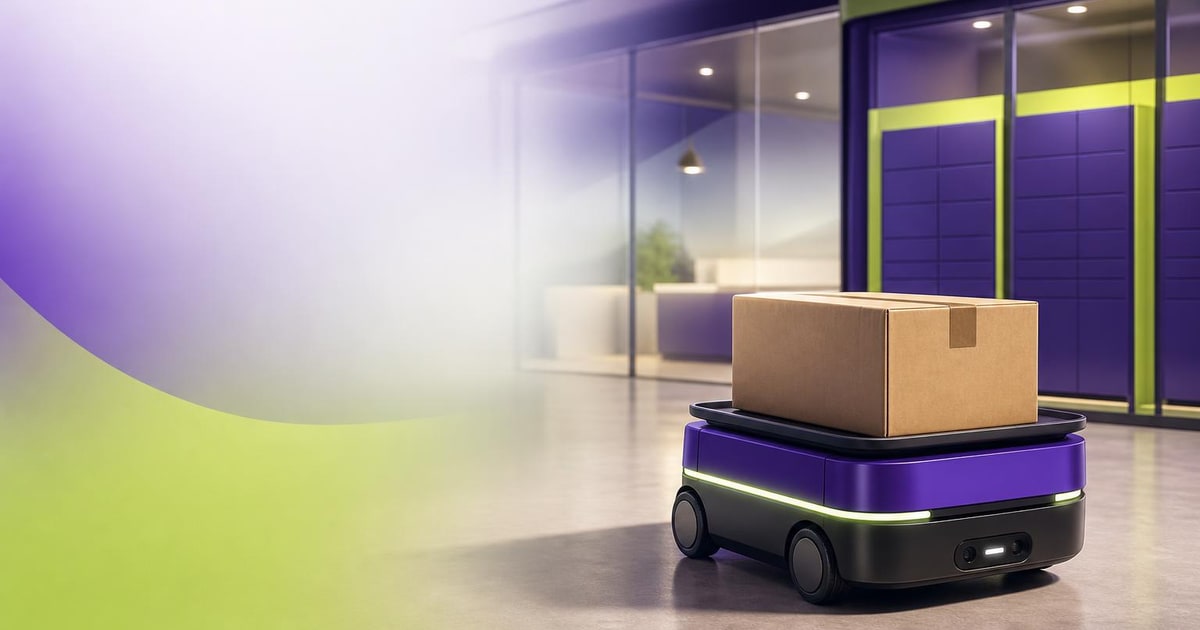
A parcel-handling robot carries one cardboard package through a compact neighbourhood delivery hub.

How Evri’s robotic parcel hub works

This is not a replacement for home delivery. Evri says the hub is designed to complement home delivery, ParcelShops, lockers, safe places and neighbour deliveries.

The difference is what happens after a courier reaches the hub. A traditional locker or ParcelShop depends on people placing parcels into individual storage locations. Evri’s proposed hub can accept multiple parcels in a single drop, then use AI and robotics to identify, sort and store them without manual handling.

The storage system is also designed to adapt to changing parcel volumes. In principle, that means the available space can be used more efficiently when demand changes, rather than relying on a fixed arrangement of compartments.

The trial location was chosen because Paintworks is a modern residential development with pedestrianised areas and sustainability commitments. Evri says it will assess how this type of hub supports successful first-time delivery in similar environments.

The important qualification is that this is a trial, not a proven commercial rollout. The announcement does not provide a UAE deployment plan, a return on investment figure or a confirmed operating cost.

What a robotic neighbourhood hub could change for UAE ecommerce

For most UAE sellers, nothing changes immediately. The trial is in Bristol, and the announcement does not create a new UAE delivery service or a new requirement for merchants.

The useful change is strategic. It gives operators another model to compare with the arrangements they use today: home delivery, carrier-run lockers, collection points and their own delivery fleet.

A neighbourhood hub could be relevant where several conditions exist at once:

That does not mean a retailer should install equipment. A business would still need to understand who owns the hub, who handles failed collections, how returns move through it, what happens to damaged parcels and how customer support works when an automated process fails.

The better first step is to examine the business’s own delivery data. Group orders by building, community and delivery window. Separate failed first attempts from successful deliveries. Then compare the cost and customer impact of doorstep delivery with a consolidated collection model.

This is where ERP and automation support may be relevant for a business that needs cleaner order, stock and delivery records before testing a new process. The technology cannot compensate for unreliable data.

  • —Many orders go to one residential area
  • —Customers are often unavailable at delivery time
  • —Buildings have suitable shared space
  • —Security and access rules allow a local collection point
  • —The operator can connect orders, tracking and collection status
How a UAE retailer could test neighbourhood parcel collection

Imagine a UAE online retailer reviewing orders from one large residential community. It finds that a meaningful share of parcels already arrives in the same area each day, but the orders are managed as separate doorstep drops.

The retailer could model a neighbourhood collection option without buying a robotic hub. It could ask four practical questions:

The result should be a comparison of operating steps, not a headline saving. A hub may reduce repeated building visits, but it can add handling, space, software and customer-service work. If customers still expect doorstep delivery, the hub may simply become another channel to support.

For a smaller seller, the sensible comparison may be simpler: use the delivery and collection options already offered by its carrier, rather than create a new local network. Businesses launching or improving their online sales can also review UAE ecommerce setup and marketplace onboarding before adding fulfilment complexity.

  • —How many parcels could be consolidated into one local drop?
  • —How many customers would choose collection if it were convenient?
  • —How long would parcels remain uncollected?
  • —What would happen to returns and failed collections?

How UAE operators should assess a parcel collection hub

Do not buy robotics because a courier company has started a trial. Instead, run a short feasibility review using your own order history and one defined community.

Measure parcel concentration, first-attempt success, delivery windows, collection demand, return journeys and customer complaints. If the numbers show a clear operational problem, speak to delivery partners about an existing locker or collection arrangement. If they do not, keep the current model and improve the data behind it.

Paknology has a commercial interest where this leads to ERP, automation or ecommerce implementation work. That is not always the right answer. If your order volume is modest or your carrier already provides a workable collection option, a simpler operational change may serve you better than new software or equipment.

Ready to launch, automate and scale?

Book a free consultation and get a clear roadmap — from company formation to a fully automated digital operation.