Flyby Smart Delivery Boxes in Dubai: How Brands Measure Ads
Smiles and Flyby are turning Dubai e-bike deliveries into a moving digital-out-of-home channel. Here is what the rollout changes for brands, retailers and delivery-led businesses.

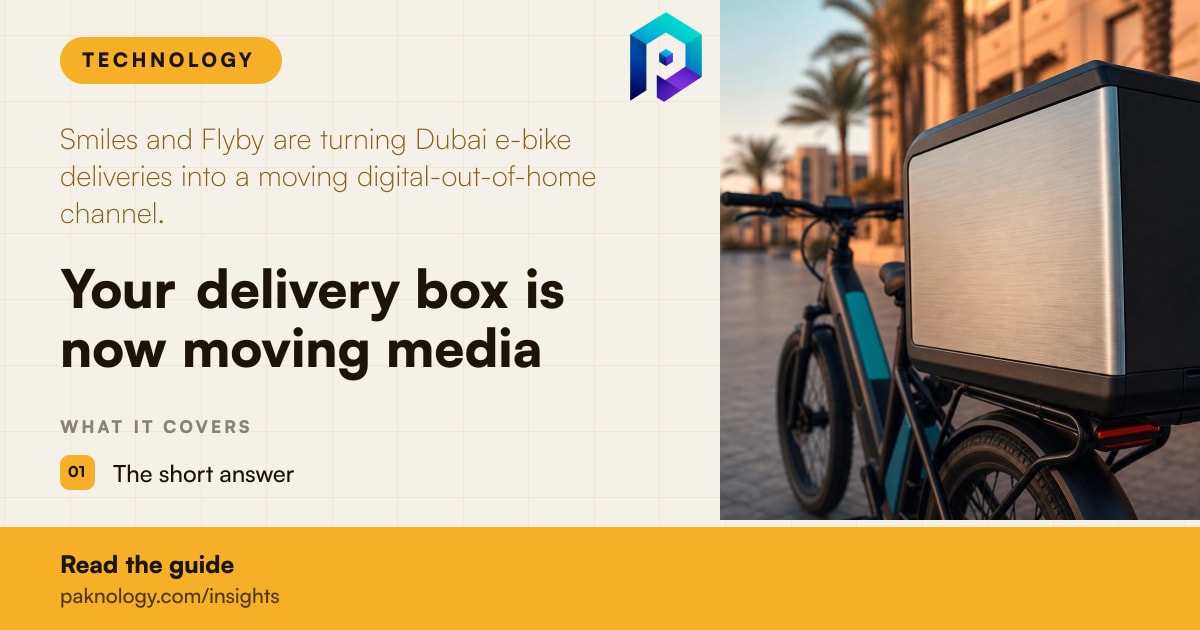
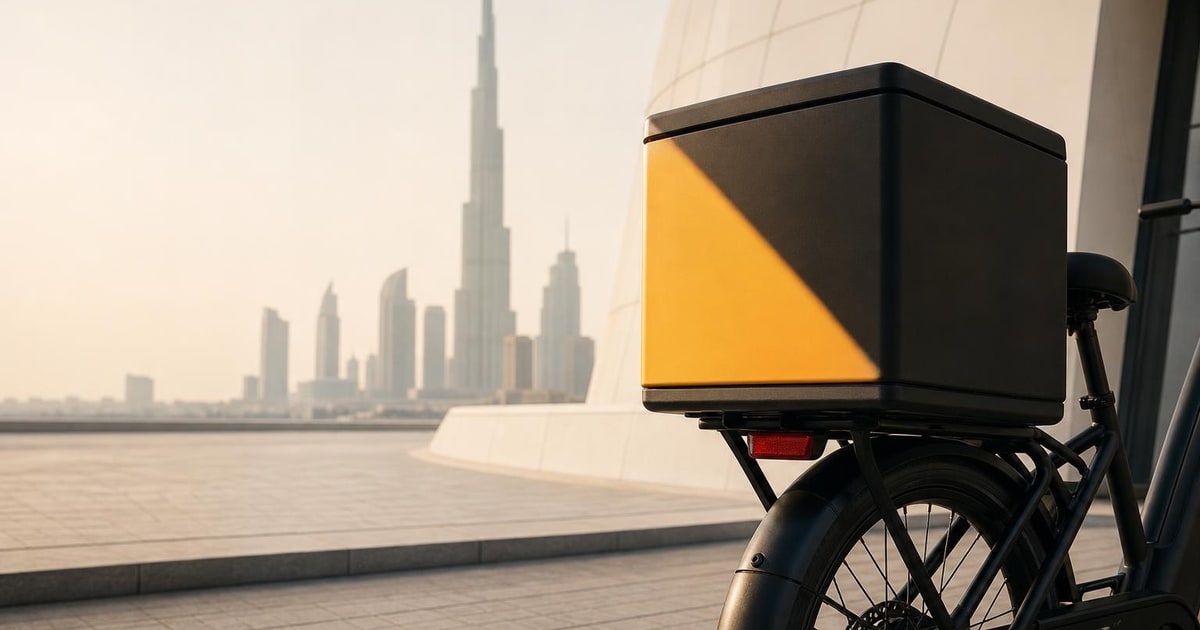
Smiles and Flyby are rolling out IoT-connected Smart Delivery Boxes across Smiles’ Dubai e-bike fleet. The boxes combine live fleet visibility with digital screens that can show advertising based on an e-bike’s location, day and time. For a UAE business, this is less about buying another generic billboard and more about gaining a measurable, neighbourhood-level route to customers. (eand.com)
The partnership is being introduced in Dubai first, with plans to expand to other emirates. Flyby says its longer-term ambition is to have thousands of boxes on the road within 24 months, although that is an ambition rather than a confirmed deployment timetable. (eand.com)

The delivery box is not just packaging. It has an IoT-connected digital screen, allowing content to change remotely while the e-bike is moving around the city. Smiles also receives live fleet tracking and monitoring, which the announcement says is intended to improve operational transparency and road safety. (eand.com)
For advertisers, the important part is the control layer. Campaigns can be geofenced, divided by day and time, updated over the air and made live within 24 hours. The announcement contrasts that with the four to six weeks associated with a fixed-format outdoor campaign. Runs, impressions and locations are also reported in real time, giving a brand data by area and time of day rather than only an estimate of passing traffic. (eand.com)
The useful change is not simply a screen on a delivery box. It is the combination of movement, location rules, remote updates and reporting.
A restaurant, retailer or consumer brand can think about this as a mobile extension of a local campaign. A message could be relevant to a particular Dubai neighbourhood at a particular time, rather than being shown across a fixed site to everyone who passes it.
That may matter most when the offer is geographically limited. A restaurant opening, a store promotion, a delivery-area push or a neighbourhood event has a better chance of being matched to the people nearby. The announcement does not publish campaign pricing, audience volumes or guaranteed reach, so businesses should not treat the new channel as a known replacement for search, social or existing outdoor media. (eand.com)
The practical comparison is with the way many smaller UAE firms market today: a mix of paid social, search, delivery-app visibility and occasional outdoor advertising. Social and search can be highly targeted, but they are screen-based and usually compete inside a busy feed or results page. Traditional outdoor advertising can be visible, but its creative and placement are less flexible once installed. Flyby’s proposition sits between the two: a physical moving presence with some digital campaign controls.
A business should start with a campaign that has a clear local reason to exist. It might be a promotion tied to a specific branch, an opening in one district, or a product that sells particularly well at certain times. The business should then ask for the delivery area, available reporting, screen format, scheduling options and any requirements for creative production.
The last step is important. The announcement describes real-time reporting, but it does not set out the measurement methodology, attribution window or conversion tracking. A sensible owner should therefore agree what success means before committing budget. That could be store visits, redemptions, delivery orders, branded searches or simply reach in a defined area.
If the campaign raises wider questions about coordinating local offers, landing pages and customer journeys, a digital marketing and SEO plan for a UAE business can help put the new channel alongside the existing ones rather than treating it as a standalone experiment.
The commercial opportunity is not limited to advertisers. Smiles is using the technology to develop its delivery fleet as a more connected platform, while the boxes provide live operational visibility. For a delivery-led business, that points to a broader question: whether vehicles and riders are only fulfilment costs, or whether they can also produce useful operational data and commercial value.
That does not mean every fleet needs smart screens. If a company has a small delivery operation, the better investment may still be basic route visibility, reliable order data and a joined-up system for sales and stock. Businesses reviewing that foundation can compare their needs with an ERP and automation setup, especially if delivery information currently sits apart from orders and accounts.
Paknology has a commercial interest in helping businesses with digital marketing, websites, apps, ERP and automation. It does not operate the Smiles or Flyby advertising network. If your business has a tightly local campaign and can measure the outcome, this new channel may be worth testing. If you do not yet know which areas, offers or metrics matter, a cheaper and simpler campaign using your existing channels is likely the better first step.
For now, map the locations, offers and results you would need before speaking to any media partner. If the gap is your campaign planning rather than the delivery-box technology itself, start with digital marketing and SEO support.
Book a free consultation and get a clear roadmap — from company formation to a fully automated digital operation.