Technology2026-10-235 min read

Hardis AI WMS roadmap: UAE warehouse decisions to map first

Hardis is extending AI from warehouse management into transport, orders and fulfilment. For UAE operators, the useful response is to map decisions and data before buying another system.

Hardis AI WMS roadmap: UAE warehouse decisions to map first

UAE warehouse AI roadmap: the practical takeaway

Hardis Supply Chain is broadening its warehouse management software into a wider supply chain orchestration platform. Its roadmap covers AI, transportation, order management and fulfilment, with systems able to share information and, over time, initiate selected operational actions. For a UAE distributor or ecommerce operator, the sensible response is not to buy an AI system because the word appears in a roadmap. It is to identify the warehouse decisions that cost time or service when they are made late.

The announcement says Hardis already uses artificial intelligence and machine learning to coordinate labour, automated equipment and robotics, anticipate possible carrier cut-off problems, and select a suitable fulfilment location for an order. The next stage adds a cross-functional AI platform using the Model Context Protocol and agent-to-agent orchestration. Hardis says this is intended to connect its own applications with third-party systems. Read the company’s roadmap announcement.

The useful question is not whether a warehouse has AI. It is whether the right decision is made early enough to protect the customer promise.

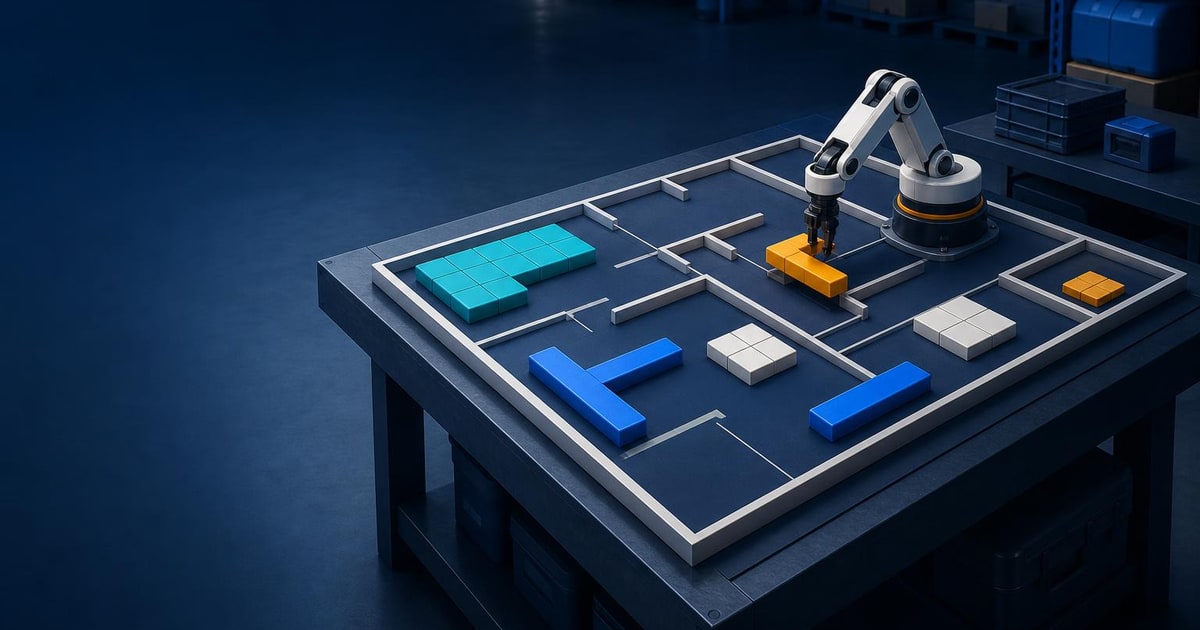
A warehouse planning board with blank zones and oversized data and decision pieces being organised on a worktable.

Hardis AI WMS roadmap: three stages and new capabilities

The roadmap has three stages. First, AI gives people natural-language access to product and operational information. Hardis says two agents are planned for Q1 2027: a Solution Expert Agent for WMS documentation and an Operation Insight Agent for analysing warehouse operations and finding improvement opportunities.

The second stage is decision support. AI would examine operational data, identify patterns, make predictions and recommend actions. The announcement gives a carrier delay as an example: a system could flag the problem before it affects fulfilment or a customer commitment.

The third stage is agentic automation. That means an AI agent could initiate a defined operational action, rather than only display a report or recommendation. Hardis says these functions are intended to include governance, security, traceability and human supervision. That distinction matters. It suggests controlled automation, not an unsupervised system changing warehouse priorities without an approval path.

Hardis is also moving Hardis WMS towards a continuous update model. It says this should allow customers to receive enhancements and innovations more frequently. Alongside that, it is extending the platform beyond warehouse activity through yard management, carrier appointment scheduling, a control-tower-style portal and native integration between Hardis WMS and Hardis OMS.
UAE warehouse operators: decisions to map before buying AI

For a UAE business, the strongest use case is coordination across a moving operation. A distributor may need to decide which site should fulfil an order, whether a carrier slot is at risk, or whether labour and equipment should be reassigned. An ecommerce operator may need to protect a dispatch promise while stock, orders and delivery activity sit in separate systems.

The announcement does not provide UAE pricing, implementation timelines or a promise that every feature is available now. It is a product roadmap, not a quotation. That means an owner should treat it as a signal about system direction and ask practical questions before committing:

If the business is still trying to bring stock, purchasing, sales and accounts into one reliable workflow, a simpler ERP project may create more value than an AI warehouse programme. Paknology’s ERP and automation service is relevant where the immediate problem is disconnected business information rather than advanced warehouse orchestration.

  • —Which decisions currently depend on spreadsheets or messages?
  • —Which data fields would an AI agent need to see?
  • —Who approves a change to stock allocation, labour or carrier planning?
  • —Can every recommendation be traced back to the data and rule that produced it?
  • —What happens when the system is wrong or a connected platform is unavailable?

UAE fulfilment example: mapping a late order and carrier cut-off

Imagine an operator handling marketplace orders, with stock records, warehouse activity and carrier planning maintained in different tools. The first useful project is not to automate every decision. It is to document one failure path: an order arrives late in the day, the preferred fulfilment location has insufficient available stock, and the carrier cut-off is approaching.

The operator should record the data needed to decide what happens next, the people who currently make the decision, the alternative fulfilment locations, and the point at which a supervisor must approve an exception. That map can then be tested against existing software. If the systems cannot provide clean, timely data, an AI layer will not repair the underlying process. It will make a confident recommendation from incomplete information.

For an online seller preparing to improve its wider operating stack, the starting point may instead be ecommerce launch support for Amazon.ae and Noon, followed by better stock and order controls. The Hardis roadmap becomes more relevant when the business has enough operational volume and system data for recommendations to be tested properly.

Next steps for a UAE warehouse AI project

Choose one operational decision that affects fulfilment reliability, document its inputs and approval rules, and measure how often it goes wrong. Do not assume a roadmap feature is available before confirming its release, integration requirements and governance model with the supplier.

The header image is an original illustration generated for this article. It shows a UAE-style distribution warehouse with stock locations, carrier appointments and connected AI decision nodes, rather than a generic warehouse photograph.

Paknology has a commercial interest where the next step is ERP and automation, ecommerce setup, or related digital work. A cheaper spreadsheet redesign, a focused workflow fix or existing software may serve the business better if the operation is small or the data is not ready for a warehouse AI project.

Ready to launch, automate and scale?

Book a free consultation and get a clear roadmap — from company formation to a fully automated digital operation.