Technology2026-09-285 min read

One Stock Record for UAE Retailers: Kensium POS 7.0

Kensium POS 7.0 puts Acumatica or Sage at the centre of stock, pricing and financial data. For a UAE retailer, the useful question is not whether it is new, but whether the local setup is ready for it.

One Stock Record for UAE Retailers: Kensium POS 7.0

Kensium POS 7.0: ERP-led stock and pricing

Kensium has announced POS 7.0, a browser-based point-of-sale system built around Acumatica, Sage 100 and Sage 500. It becomes generally available on 1 October 2026. The central idea is simple: the ERP remains the master record for inventory, pricing, customer data and financial information, while the till becomes the place where transactions are entered.

That is different from a conventional POS and ERP arrangement. In that model, the till may keep its own stock and customer records, then send updates to the ERP overnight or on a schedule. Kensium says POS 7.0 instead keeps the register working from the ERP’s data continuously, reducing the number of separate records that need to be reconciled.

The full announcement is on Kensium’s POS 7.0 product page, which describes the product as an ERP-led POS rather than a separate system alongside the ERP.

The practical promise is not a prettier till. It is fewer places where stock and prices can disagree.

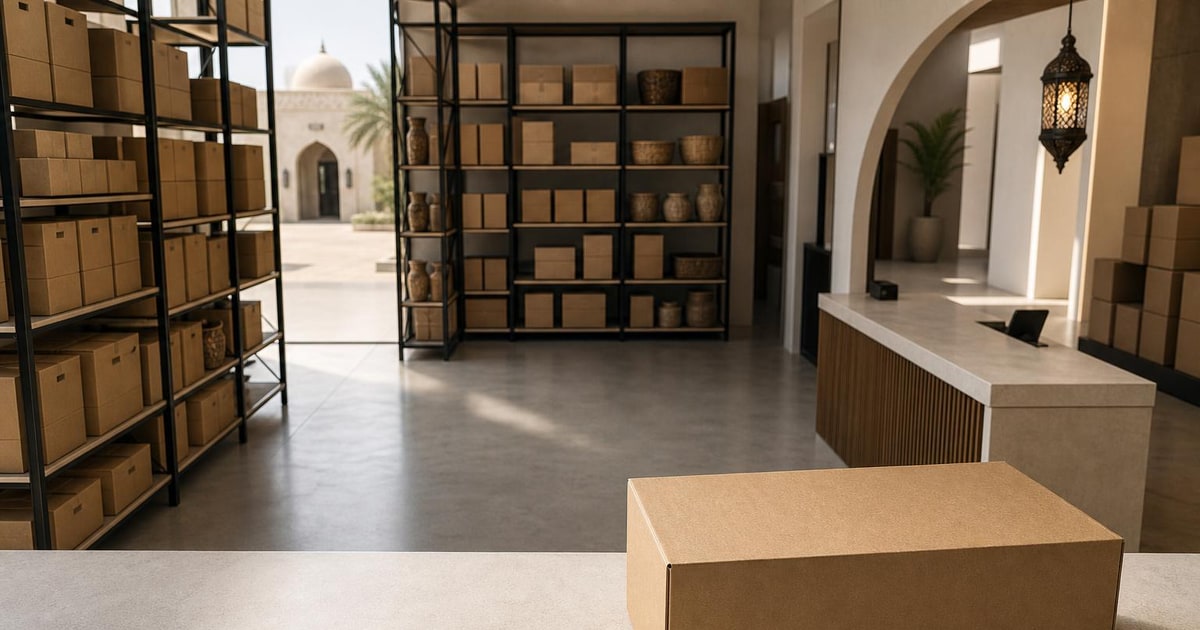
A single unmarked stock carton sits on a receiving counter in an orderly retail stockroom.

UAE retail: offline sales, stores and supported devices

The strongest use case is a retailer, distributor or hybrid B2B and B2C company already using one of the supported ERPs. The announcement names mid-market businesses with one or more physical locations and high transaction volumes. It also lists support for multiple stores, multiple registers, buy online, pick up in store and buy online, return in store.

For those businesses, the possible gain is operational rather than cosmetic. A price changed in the ERP should be reflected at the register. A sale should feed back into the same inventory and financial picture. A return should not leave one version of the transaction in the POS and another in the accounts system.

The browser-based design also changes the hardware question. POS 7.0 can run on Windows, Android and iOS devices. Its offline mode is designed to keep sales, card payments, gift cards and tax calculation running when the internet connection fails, then synchronise transactions when the connection returns.

That does not prove that every UAE payment terminal, acquiring arrangement or tax workflow will work without configuration. The sensible reading is that offline operation is a capability to test, not a substitute for local implementation checks.
Kensium POS 7.0 cost and seven-component setup

Kensium’s announcement does not publish a licence or implementation price. A UAE owner should therefore avoid comparing it with another POS using only a monthly software figure. The real cost structure is likely to include the POS licence, ERP licences, implementation, data migration, staff training, supported hardware and payment integration. The quote should separate each of those items.

One useful figure is supplied by Kensium itself. Earlier generations could require as many as seven separate components per store to deploy and administer. POS 7.0 centralises administration into one console. That does not automatically mean seven times less work or seven times lower cost, but it gives an owner a concrete migration question: how many systems does the current estate require, and which of them disappear?

A small shop with one branch may not have enough reconciliation work to justify a new platform. A retailer with several branches, shared stock, frequent price changes and online-to-store fulfilment has a stronger reason to investigate.

Kensium POS 7.0 evaluation checklist for UAE retailers

Start with the current ERP and data, not with the product demo. A sensible evaluation should cover:

Paknology’s guide on what a small UAE retail business should look for in an ERP makes the same practical point from a local buyer’s perspective: test stock movements, returns, VAT reporting, simultaneous edits and audit trails using real transactions rather than a polished sample file.

If the business already runs Acumatica, Sage 100 or Sage 500, the next step is to request a demonstration against its own product catalogue, prices and branches. If it runs another ERP, POS 7.0 is not an immediate replacement decision because the launch support listed by Kensium is limited to those three systems.

  • —A stock transfer between branches and the timing of both balances
  • —A price change made in the ERP and shown at the register
  • —A return, exchange and partially paid transaction
  • —A sale completed during an internet outage
  • —Card, gift-card and tax behaviour in offline mode
  • —The audit trail after a correction or cancellation
  • —The export and migration plan if the business later leaves

When Kensium POS 7.0 fits a UAE retailer

Paknology has a commercial interest here because it implements ERP and automation systems in the UAE, including modular inventory, warehouse, invoicing, VAT-ready reporting and accounting workflows through its ERP and automation service. That makes it relevant when the problem is broader than the till: stock, sales, purchasing and accounts all need one operating process.

It is not automatically the cheapest or simplest route. A one-branch retailer with modest stock may be better served by keeping its current POS and improving controls. A restaurant needs a different operating model, such as recipe-level inventory, kitchen workflows and delivery reconciliation, rather than a retail ERP-led POS.

The sensible next step is to document the current ERP, number of branches, registers, stock locations, payment setup and reconciliation problems before requesting a quote or demo. If the issue is a fragmented back office rather than a Kensium-compatible ERP, compare the required modules and migration work through Paknology’s ERP service, but choose a smaller system when it solves the actual problem with less complexity.

Ready to launch, automate and scale?

Book a free consultation and get a clear roadmap — from company formation to a fully automated digital operation.