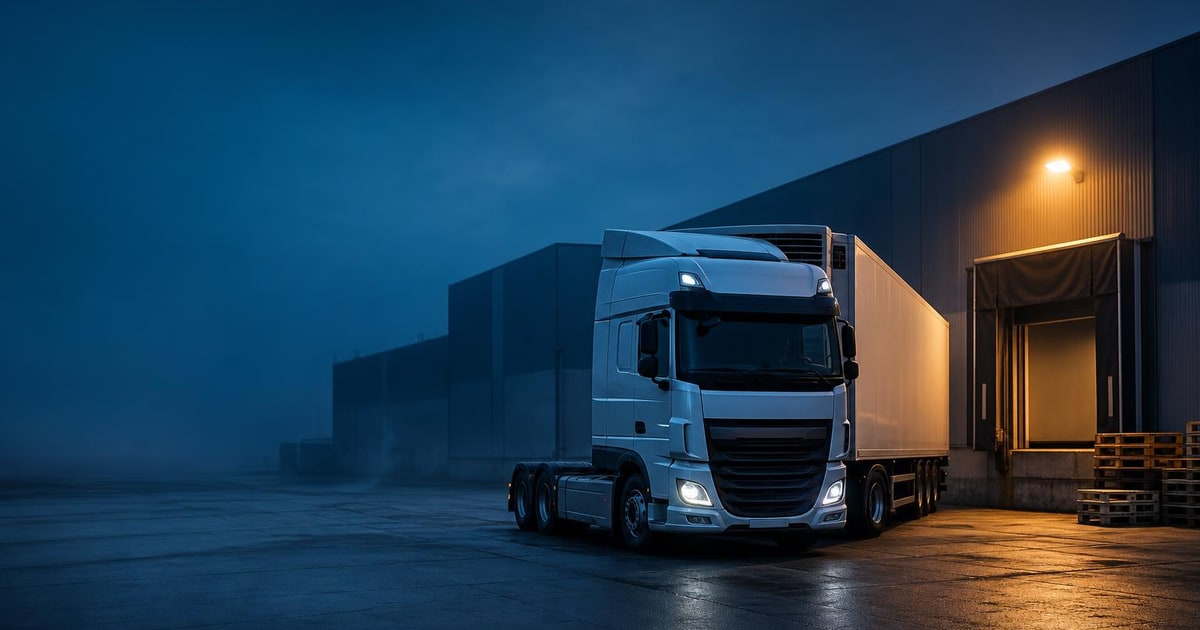
Autonomous trucking planning lessons for UAE 3PLs
Kodiak and Charger USA are hauling refrigerated and dry freight on a 435-mile Texas lane, with driverless service planned later. Here is what UAE fulfilment and 3PL owners should take from it.

UAE fulfilment and 3PL owners do not need to buy autonomous trucks because of this announcement. They should, however, start treating predictable long-haul replenishment as a technology and data question, not only a driver and vehicle question. The immediate practical step is to identify which parts of the operation depend on repeatable routes, clean shipment data and reliable handovers.
The reason is straightforward. Kodiak AI and Charger USA have begun moving refrigerated and dry freight between Dallas and Laredo, a 435-mile route serving consumer packaged goods and food and beverage customers. The trucks currently have a safety driver. The companies intend to move to driverless operations after Kodiak completes its safety case, and Kodiak says it is targeting long-haul driverless service by the end of 2026. (kodiak.ai)

This is a live freight operation, but it is not yet a driverless public-road service on the Dallas–Laredo lane. Kodiak and Charger completed their first delivery on 8 September 2026. The current model combines Charger’s carrier operation and transport management system with Kodiak’s autonomous driving system, called the Kodiak Driver. The technology is being used to haul two practical freight categories: temperature-controlled goods and dry goods.
That detail matters more than the word “autonomous”. The pilot is built around a repeatable commercial lane and regular replenishment flows. It is not a demonstration with an unusual load or a closed test track. Charger already provides truckload, dedicated, temperature-controlled and cross-border services, with warehousing and cold storage in its wider network. (kodiak.ai)
The useful lesson is not that trucks are suddenly driverless. It is that autonomy is being attached to a defined freight lane with defined operating data.
For a UAE retailer, importer or 3PL, the likely effect is indirect. The announcement does not create a UAE route, change a local licence requirement or provide a ready-made autonomous trucking service in the Gulf. It does show the direction of travel for long-haul logistics: carriers may eventually sell more predictable capacity on selected routes, with technology doing more of the driving and software coordinating the surrounding operation.
That could matter for regional replenishment between warehouses, ports and distribution centres. A business with stable volumes, repeatable delivery windows and temperature-sensitive stock is more likely to benefit from this type of operating model than a business handling irregular, heavily customised jobs. This is an inference from the Dallas–Laredo deployment, not a promise about UAE availability. (kodiak.ai)
The sensible comparison is with the model many businesses use today: a human-driven vehicle, a transport booking, a warehouse handover and a separate view of stock. Autonomous trucking does not remove the need for those processes. It increases the value of accurate master data, live shipment status, route exceptions and proof that the right goods reached the right place at the right temperature.
Start with a lane review, not a vehicle purchase. Select one repeatable movement, such as replenishment from a central warehouse to a regular delivery zone. Record the volume, delivery windows, temperature requirements, loading delays, failed deliveries and the data your carrier can actually share.
If those records sit across spreadsheets, messaging threads and disconnected systems, the first investment may be better operational control rather than autonomy. Paknology’s ERP and automation service is relevant where a UAE business needs to connect stock, orders and workflow before it can judge whether more advanced transport technology would help. The separate question of what a small retailer should expect from such software is covered in this UAE ERP guide.
A business should also ask its logistics partners specific questions: Which lanes are consistently repeated? What information is available before dispatch? Can temperature, location and delivery exceptions be shared in one feed? Who owns the data if the carrier changes? Those questions are useful now, whether the vehicle has a driver in the cab or an autonomous system behind the wheel.
Paknology has a commercial interest if this review leads to an ERP or automation project, because that is one of its services. A cheaper spreadsheet, a carrier portal or a simple process change is the better answer when shipment volumes are low and the current operation is still understandable. For a UAE business with repeated lanes and disconnected operational data, the sensible next step is to document the workflow and then assess ERP and automation support, rather than buy into autonomous trucking on the strength of one overseas announcement.
Book a free consultation and get a clear roadmap — from company formation to a fully automated digital operation.