News2026-09-135 min read

KUKA’s 1,500 kg Autonomous Forklift: Should UAE Warehouses Act?

KUKA has opened orders for a new autonomous counterbalance forklift that moves pallets and containers up to 1,500 kg. UAE operators should assess it, but buying now is not yet the right answer for most sites.

KUKA’s 1,500 kg Autonomous Forklift: Should UAE Warehouses Act?

Should UAE warehouses buy an autonomous forklift now?

UAE warehouses and 3PLs should start an evaluation, not rush into a purchase. KUKA has announced the KMF 1500P-CB, an autonomous counterbalance forklift for moving open and closed pallets and containers up to 1,500 kilograms. Orders are open worldwide in September 2026, but deliveries are expected to begin in December 2026. (kuka.com)

That timing matters. This is a real product launch with a stated route to availability, but the announcement does not provide UAE pricing, local deployment examples, integration lead times or a site-specific return-on-investment case. The honest answer for most UAE businesses is not yet.

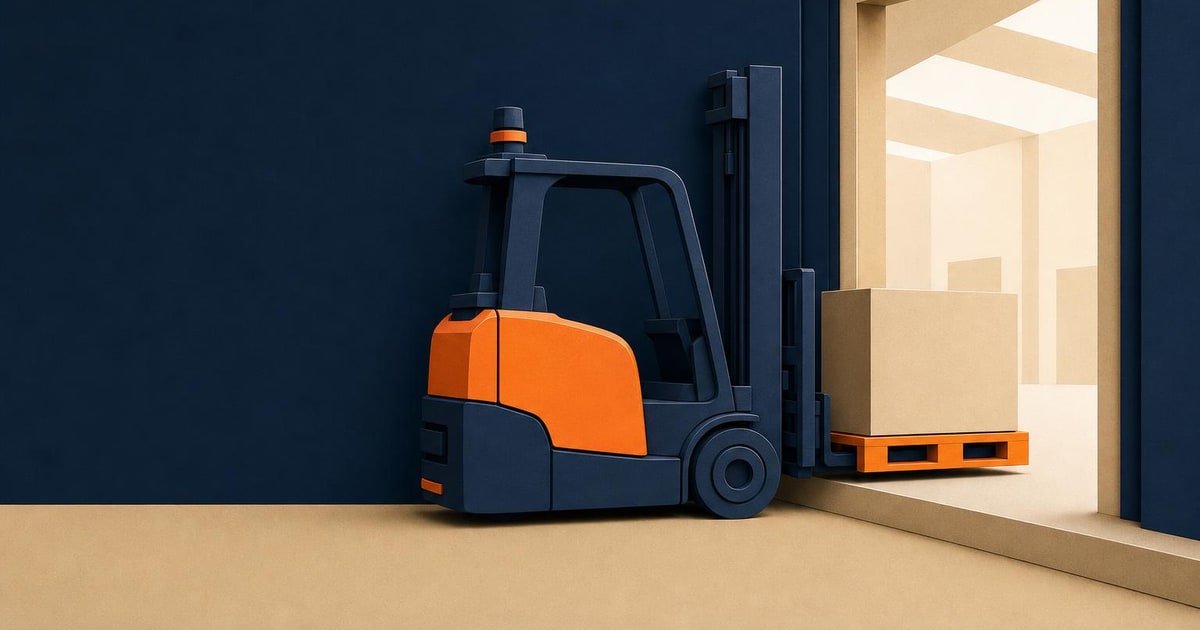
A driverless counterbalance forklift carrying a pallet pauses at the entrance to a warehouse.
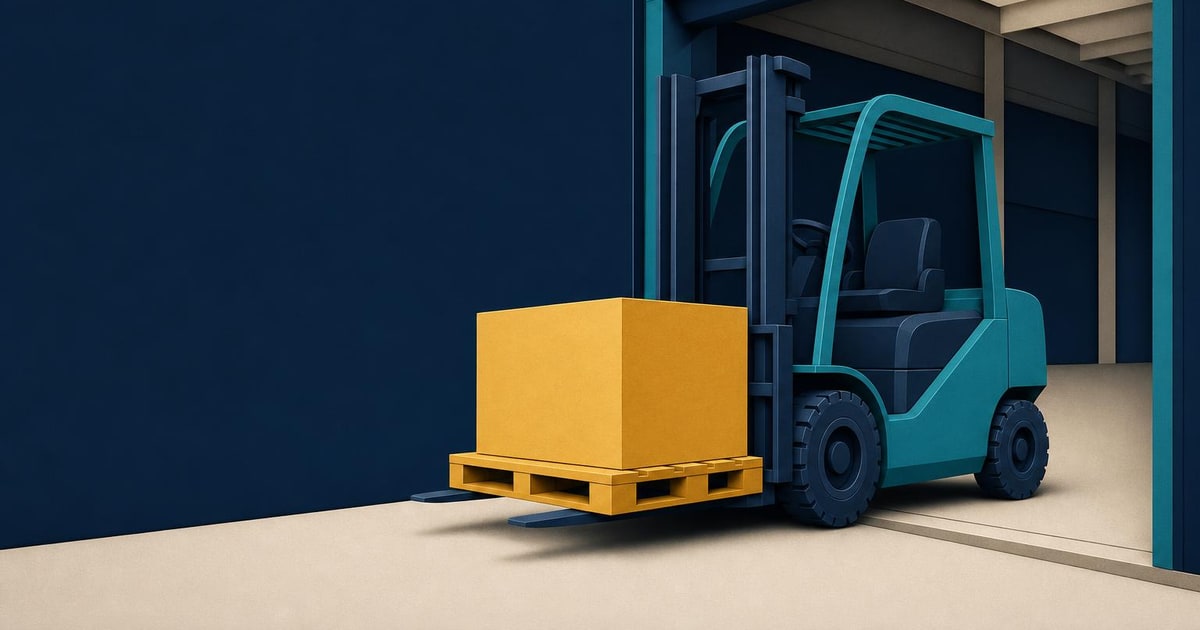
A teal autonomous counterbalance forklift carrying one pallet pauses at the entrance to a warehouse.

What is KUKA’s KMF 1500P-CB autonomous forklift?

The KMF 1500P-CB is the first model in KUKA’s new KMF 1500P family. The “CB” means counterbalance. KUKA says the design is intended for longer transport routes and can collect loads at enclosed transfer points, including roller conveyors, where access from below is not available. (kuka.com)

The vehicle is designed to detect, pick up and move loads to lifting heights of up to three metres. It uses LFP batteries and conductive charging. KUKA also states that it supports automated operation around the clock, with the aim of maintaining consistent material flow. (kuka.com)

The useful question is not whether the forklift is autonomous. It is whether your busiest pallet routes are repetitive enough to automate safely.

How could an autonomous forklift change warehouse operations?

The main change is the move from manual pallet transport to a vehicle that can handle recurring movements between receiving, storage, production and dispatch areas. KUKA positions the forklift for manufacturing and warehouse logistics, rather than only for a fixed production-line task. (kuka.com)

Its counterbalance layout may also make it relevant to UAE facilities with mixed pallet types or existing transfer stations. The company says operators do not need to adapt existing transfer stations for open and closed pallets and containers. That could reduce redesign work, but it is not the same as proving that a particular warehouse will need no infrastructure changes.

KUKA says the model is built on its KUKA.AMR software ecosystem. It also supports the VDA 5050 interface, allowing connection to other fleet management systems. Its wider autonomous forklift material says the platform can connect with warehouse management, enterprise resource planning and manufacturing execution systems. (kuka.com)

For a UAE distributor or 3PL, interoperability is potentially more important than the payload figure. A forklift that cannot receive tasks from the existing warehouse system will create another island of software and another manual hand-off.
What safety and compliance checks are needed in the UAE?

KUKA says the KMF 1500P-CB has a 360-degree safety concept for dynamic warehouse and production environments. The announcement also says the system meets the requirements of the new European Machinery Regulation, which becomes mandatory in January 2027. (kuka.com)

That is useful information, but it is not a UAE approval or a substitute for a local safety review. A buyer still needs to confirm pedestrian controls, emergency procedures, operating zones, fire and charging arrangements, training, maintenance support and the responsibilities of people working near the vehicle.

Before treating the safety claim as a buying decision, ask KUKA or its local partner for the technical file, applicable certifications, risk-assessment method, site requirements and service response model for the UAE.

When should a UAE warehouse pilot an autonomous forklift?

Act now if you have a clear pilot candidate. Good candidates are stable, high-volume pallet routes with repeatable collection and drop-off points. Map the route, pallet types, transfer stations, traffic patterns, shift coverage and current failure points before discussing fleet size.

Do not act yet if your stock locations are unreliable, your warehouse management data is incomplete, or your processes change constantly. Automation will not repair poor master data or unclear hand-offs. It may simply move those problems faster.

Your technology team should also test how VDA 5050 would sit alongside the systems already used by the warehouse. If that raises wider questions about stock, accounts and operational control, our guide to what a small UAE retail business should look for in an ERP is a useful starting point. Businesses planning broader process automation can also review our ERP and automation service, although Paknology does not supply or install KUKA vehicles.

What should UAE businesses ask before buying an autonomous forklift?

Ask for four answers before approving a business case:

Then compare the total operating model, not just the forklift. Include site preparation, software integration, charging, safety controls, training, service and the human work that remains around exceptions.

The product is worth assessing because KUKA has stated a payload, lift height, battery approach, integration route and delivery window. But the announcement is not enough to prove that it will pay back in a UAE warehouse. Start with a measured pilot and wait for a site-specific proposal before committing.

  • —What exact pallet movements will be automated?
  • —What happens when a pallet, person or vehicle blocks the route?
  • —Which warehouse systems will issue and receive transport tasks?
  • —What local support, spares and maintenance coverage are included?

Where does Paknology fit in an autonomous forklift project?

Paknology has a commercial interest when the project exposes a need for ERP or automation work around the warehouse. Our role is software and business technology, not autonomous forklift supply. A warehouse with simple, stable processes may be better served by process discipline, barcode controls or a smaller software improvement before it considers robotics.

The next step is to document your pallet routes and system hand-offs, then ask for a technical assessment from the equipment provider. If the resulting project needs software integration or workflow automation, see ERP and automation support; if it does not, the cheaper and simpler option is to improve the existing process first.

Ready to launch, automate and scale?

Book a free consultation and get a clear roadmap — from company formation to a fully automated digital operation.