Maersk Visibility Studio for UAE shipment tracking
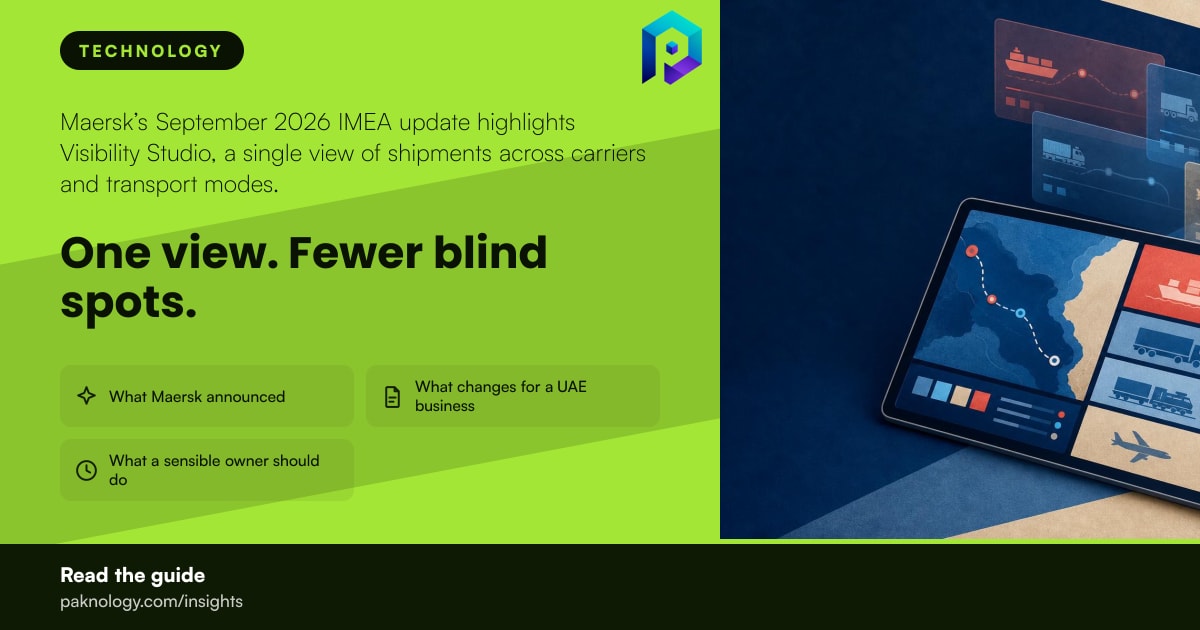
Maersk’s September 2026 IMEA update highlights Visibility Studio, a single view of shipments across carriers and transport modes. Here is what it means for UAE importers and marketplace sellers.

Maersk’s IMEA market update, published on 9 September 2026, promoted Visibility Studio as part of its lead logistics services. The platform brings shipment data from different carriers and transport modes into one view, including tracking information, estimated arrival times and disruption alerts. (maersk.com)
That matters because UAE supply chains are rarely confined to one provider. An importer may use an ocean carrier for the main movement, a freight forwarder for another shipment, an airline for urgent stock and a local haulier for the final leg. The information often sits in separate portals, emails and spreadsheets.
The update also reflects a more difficult regional operating picture. Maersk says Middle East conditions continue to influence services, cargo acceptance and routing. It also reports pressure on air freight capacity to and from the UAE, while cargo flows through Saudi ports are affecting inland collection and truck turnaround times. (maersk.com)
The useful change is not another tracking page. It is one place to see which shipments need attention first.

Visibility Studio does not make a delayed shipment arrive on time. It gives an operations team earlier and more consistent information about what may happen next.
For a UAE importer, that can affect four practical decisions:
For a marketplace seller, the benefit is mainly planning. If a shipment contains fast-moving stock for Amazon.ae or Noon, a more credible arrival estimate can help the owner decide whether to pause advertising, adjust replenishment or avoid promising delivery dates that depend on uncertain inbound stock. Paknology’s ecommerce launch service for Amazon.ae and Noon onboarding addresses the selling side, but shipment visibility remains a separate logistics decision.
A worked example makes the point. Suppose a UAE seller has 12 inbound shipments: eight by ocean, two by air and two with separate inland providers. Without a consolidated view, the owner may check several carrier pages each morning and still miss that three shipments share a common connection or port risk. With a single view, the owner can sort attention around delayed or exposed cargo rather than treating all 12 shipments as equally urgent. The saving is not a guaranteed freight discount. It is better timing for stock, customer communication and purchasing decisions.
Maersk’s update also notes that bonded export capabilities are available from Khor Fakkan and Fujairah terminals. Cargo can move under customs control before final clearance, creating additional export-planning options. Dangerous goods under bond remain subject to approvals, restrictions and handling requirements. Visibility software does not replace those customs and acceptance checks. (maersk.com)
The sensible first step is not to buy a platform because it appears in a market update. It is to measure the problem.
List the last 20 inbound or outbound shipments and record:
If nearly every shipment uses one carrier and the existing portal gives reliable updates, doing nothing may be the right answer. A spreadsheet and a daily check may be enough for a small, predictable operation.
If shipments are split across ocean, air, road and several providers, test whether a consolidated view would change a decision. The useful questions are simple: would the owner reorder earlier, change a delivery promise, protect a key customer or avoid an unnecessary urgent shipment?
The business should also decide who owns the response. An alert with no assigned action is just another notification. Set rules such as “check any shipment whose ETA moves beyond the customer promise” or “escalate stock covering a live marketplace promotion”. Keep those rules inside the operating process, not only inside the tracking tool.
This is also where stock and finance systems matter. Visibility data is most useful when it can be compared with purchase orders, sales velocity and available stock. A UAE retailer reviewing its wider systems can start with this guide to what a small business should look for in an ERP, but should not assume that an ERP automatically provides carrier-level shipment visibility.
Visibility Studio is a Maersk service, and the September update directs customers to explore it or speak with a Maersk representative. The article does not publish a standard UAE price, universal implementation timeline or guarantee that every carrier and transport mode will provide identical data quality. Those points need to be confirmed for the company’s own shipment mix. (maersk.com)
Paknology has a commercial interest when this discussion leads to ecommerce setup, ERP and automation, or related digital work. It does not provide Maersk Visibility Studio. If your shipment volume is low, your carriers are limited and your current process works, a cheaper spreadsheet-led routine may serve you better. If fragmented logistics data is already causing missed stock decisions, map the workflow first and then ask Maersk what coverage and access are available. If that review exposes wider process gaps, you can talk to us about the UAE ecommerce or ERP work that sits around the logistics problem.
Book a free consultation and get a clear roadmap — from company formation to a fully automated digital operation.