Technology2026-11-105 min read

Serve Physical AI Services: a UAE logistics test

Serve Robotics is opening the connectivity and data systems behind its delivery robots to other builders. Here is what that could mean for UAE logistics firms, and what owners should do now.

Serve Physical AI Services: a UAE logistics test

The short answer

Serve Robotics has launched Physical AI Services, a business line that offers robot connectivity and data tools to other companies building autonomous systems. For a UAE logistics operator, the important change is not a new robot to buy. It is the possibility of using shared infrastructure for fleet connections, data handling and AI support instead of building every layer internally.

Most small and mid-sized operators should do nothing immediately. They should first check whether their current warehouse, delivery and stock systems produce the data that a future robot fleet would need.

The useful question is not “Can we buy a robot?” It is “Could our systems give one a reliable job?”

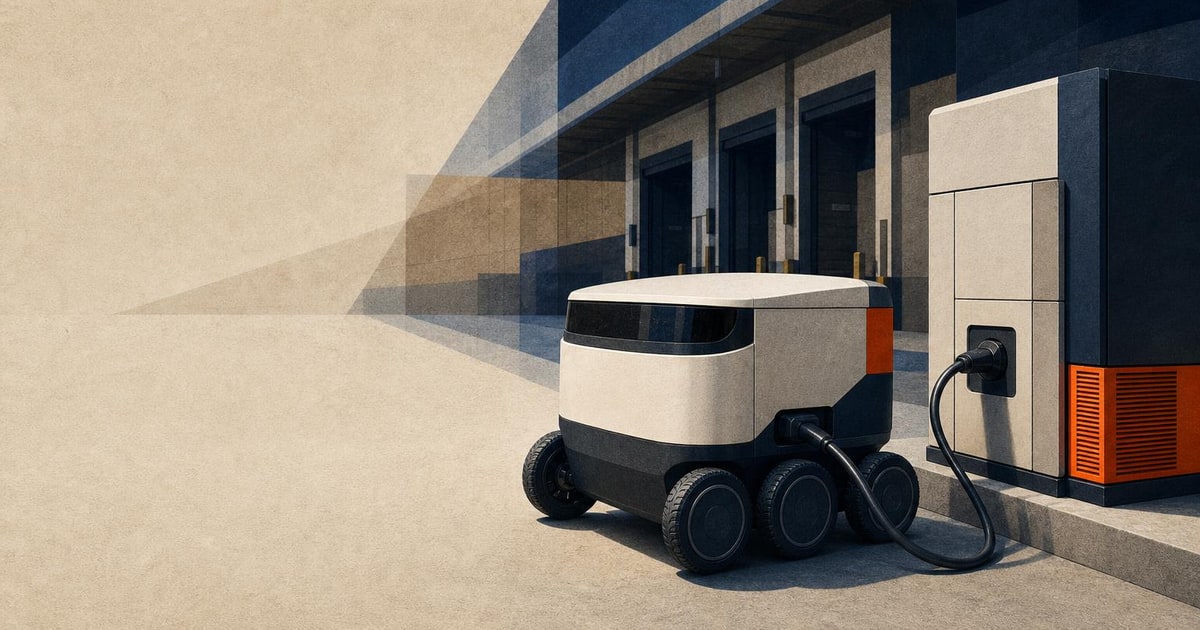
A delivery robot is connected by cable to a modular service unit at a logistics dock.

What Serve has actually launched

Serve Robotics is best known for self-driving sidewalk delivery robots. Its new Physical AI Services line takes technology developed for its own fleet and offers it to other robotics companies working in areas such as construction, farms and warehouses.

The company describes three products. Serve Link connects robots in the field to AI systems running in data centres. The aim is to give robots access to more computing power without putting all of it onboard. The service is also designed to cope with unreliable networks and still maintain a dependable connection.

A second tool helps companies find unusual or difficult examples in the large volumes of real-world data collected by robots. Those edge cases can then be used to improve training. The third is a real-world data catalogue built from Serve’s sidewalk robots, intended to help train models to understand human environments.

Serve says Bedrock Robotics is a customer, and that it is working with T-Mobile on bringing AI computing closer to robots. The detail matters because this is not simply a robot rental service. It is a technology layer around autonomous machines. TechCrunch’s report explains the three-part offer.

What changes for a UAE logistics business

The immediate effect is limited. Serve has not announced a UAE rollout in the source report, and there is no published commercial rate to put into a local business case. The sensible interpretation is that robotics may become more modular.

A logistics company could eventually buy or lease machines from one supplier, use a separate connectivity layer, and connect that layer to warehouse, delivery or customer-service software. That is similar in principle to using a specialist cloud or payment service rather than building those capabilities from scratch.

For a UAE operator, the practical issue is integration. A robot needs accurate tasks, locations, inventory status, exception rules and hand-off instructions. If orders sit in one system, stock in another and delivery exceptions in a chat thread, a robotics project will inherit that disorder.

This makes the development more relevant to businesses with repeatable routes, controlled sites or high volumes of routine movement. It is less relevant to an owner whose main problem is demand, staffing or unreliable stock records. Robotics infrastructure will not repair a weak operating process.
A worked example: the data before the robot

Imagine a UAE warehouse that wants autonomous movement between receiving, storage and packing. Before choosing a machine, the owner should map four data points:

If those answers are clear and recorded in connected systems, the business has a starting point for a robotics pilot. If they depend on manual messages or separate spreadsheets, the first project is process and system clean-up.

That is where a normal ERP or automation review can be more useful than a robotics purchase. Paknology’s ERP and automation service is relevant to that foundation, but it is not a robot fleet, connectivity platform or autonomous-navigation service.

  • —Which order creates the task
  • —Where the item is stored
  • —Who handles an exception
  • —How completion reaches accounts

What a sensible owner does

Start with one workflow, not a fleet. Write down the movement that costs the business the most time or creates the most repeated manual work. It might be moving packed orders, checking a storage location or handling a delivery exception.

Then measure the workflow in operational terms: how many tasks occur, how often information is re-entered, how many exceptions arise and which system holds the final record. Do not invent a robotics saving before those figures exist.

A useful next step may be a small integration or automation project rather than a robot trial. A business with no repeatable workflow should wait because there is nothing stable to automate. A business with a clear, high-volume workflow can begin preparing its data and vendor requirements without committing to a machine.

  • —Keep the current process if it is still cheaper and reliable
  • —Clean up the data if systems disagree
  • —Ask vendors how their systems expose orders and status
  • —Treat connectivity, safety and human hand-off as separate requirements

Where Paknology fits

Paknology has a commercial interest where this discussion leads to ERP, automation, websites, apps or related business systems. It does not sell Serve’s services, delivery robots or warehouse robots. A cheaper or simpler option may be better if the real issue is a basic stock process, a single workflow or a spreadsheet that only needs replacing with a straightforward system.

For now, document one repeatable logistics workflow and identify where its data lives. If the gap is system integration or automation rather than robotics itself, review the ERP and automation service; if no Paknology service fits, talk to us and keep the scope narrow.

Ready to launch, automate and scale?

Book a free consultation and get a clear roadmap — from company formation to a fully automated digital operation.