Restaurant Kiosk Pilot Plan for UAE Cafés and QSRs
Square’s new intelligent kiosk combines voice, touch, payments and menu recommendations. For a UAE café or QSR, the sensible response is a measured pilot, not a full rollout.

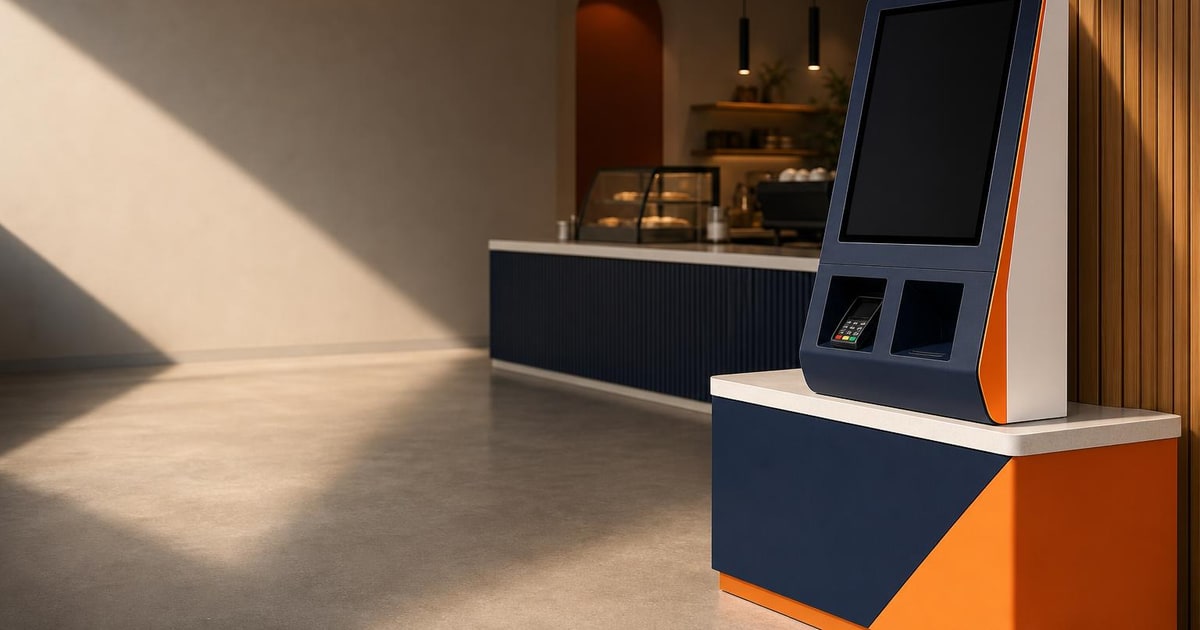
Square has introduced Square Kiosk, a self-service ordering device aimed at quick-service restaurants. It combines a large touch display, integrated payments, barcode and gift-card scanning, voice interaction and software that understands the seller’s menu. The company says customers can ask questions, request changes, find alternatives and receive suggestions while moving between voice and touch ordering. The details come from Square’s own announcement, published on 14 October 2026.
This is more than a digital menu on a stand. Square describes an “agentic” voice layer that can use menu context to answer questions and suggest additions. Its examples include popular items at a particular location, common pairings and options for guests looking for vegetarian food or allergy information.
The important change is not self-ordering itself. It is the attempt to make self-ordering behave more like a trained member of staff.

A kiosk could take pressure off the front counter during a lunch rush, in a food court or at a busy takeaway branch. Staff may spend less time repeating menu explanations and entering routine orders. They can then focus on drink preparation, food hand-off, table support, cleaning and resolving the orders that genuinely need human attention.
That does not mean a kiosk automatically reduces headcount. The Square announcement talks about freeing staff for hospitality and other responsibilities, not removing them. In a UAE operation, the value is more likely to come from moving people to the work customers still notice: accurate fulfilment, speed, cleanliness and a helpful response when something goes wrong.
The device also connects ordering with payment, loyalty and gift-card use. That could be useful for a branded café or multi-branch operator, but the announcement is a US product release. It does not establish UAE availability, local acquiring support, local tax treatment, Arabic-language capability or compatibility with a UAE operator’s existing systems.
For the local business, those questions matter more than the product video.
Start with one branch and one peak period. Do not begin by replacing every counter position or redesigning the whole menu.
The pilot should test operational fit, not just whether customers touch the screen. Record queue length, time from arrival to payment, order amendments, missing modifications, refunds and the number of times a staff member must intervene. If the kiosk handles simple orders but creates confusion for custom drinks, meal substitutions or allergy questions, the menu and workflow need work before adding another device.
A restaurant already reviewing its wider till and order flow may want to compare the kiosk with its existing restaurant POS setup. The key question is whether the kiosk feeds the same menu, payment records, reporting and fulfilment process, rather than creating another isolated system.
Square’s announcement describes a 21.5-inch touchscreen, presence detection, integrated tap and dip payments, gift-card scanning and links to Square Loyalty and Neighborhoods profiles. It also says packaged-goods scanning is coming later. These features are relevant, but they should be treated as product claims to verify in the market where the business operates.
Ask the supplier or implementation partner:
The cost structure matters as much as the device. Square says the kiosk requires a paid software plan and a per-device software charge, with the hardware total varying by stand type. Do not compare only the purchase price. Include subscriptions, payment processing, installation, network changes, menu work, support and the cost of staff training.
A kiosk is most useful when the business already has a stable menu, reliable order routing and enough footfall to justify another ordering channel. If the real problem is inaccurate stock, disconnected branches or weak reporting, a kiosk may simply make the front end faster while leaving the back office confused.
In that situation, improving the operating system may be the better first step. A review of ERP and automation options can help separate a genuine queue problem from a wider data and workflow problem. A small operator may also find that a better-configured staffed POS, clearer menu boards and one extra team member at peak time are simpler than introducing new hardware.
Paknology has a commercial interest because it provides restaurant POS services, as well as ERP and automation work. That means a kiosk pilot could lead to work Paknology can supply, but it also means the cheaper or simpler option may be better for a small café with modest queues and a workable existing till.
The next step is to measure one branch during its busiest service period, then map the kiosk into the current ordering and fulfilment process before discussing hardware. If the bottleneck is genuinely at the counter, review the restaurant POS service; if it is elsewhere, fix that first.
Book a free consultation and get a clear roadmap — from company formation to a fully automated digital operation.