Technology2026-11-045 min read

Verkada fleet security for UAE businesses: one cloud view

Verkada has added fleet security, enterprise audio and new AI integrations to its cloud platform. Here is what UAE retailers, warehouses and multi-site operators should take from it.

Verkada fleet security for UAE businesses: one cloud view

What Verkada Transportation and Sound Systems add

Verkada has expanded its cloud-managed physical security platform beyond fixed cameras and building access. Its new Transportation product line combines vehicle cameras, a 5G and Wi-Fi gateway, vehicle diagnostics and a revised Command interface. Security teams can review footage from moving or parked vehicles, search events by GPS location, driving behaviour or vehicle health, and use face blurring for passenger privacy.

The same announcement adds Sound Systems for cloud-managed audio. That covers ambient music, site announcements and automated deterrence through one interface. Network Audio Players can connect existing third-party speakers and amplifiers, while Network Speakers use Power over Ethernet for simpler deployment.

Verkada also introduced Catalyst, a read-only Model Context Protocol integration for its Command platform. It allows approved AI tools such as Claude, ChatGPT and Gemini to work with selected operational data. The examples given include checking whether shelves are stocked and creating an IT ticket when a camera or sensor loses its network connection. The release says customers keep control of their agents and workflows because Catalyst is read-only.

The software updates are scheduled to begin rolling out on 8 October 2026. Hardware is expected to start shipping in October and November 2026. Verkada’s announcement explains the product changes.

The practical change is not “AI everywhere”. It is one operating view for more parts of the site and fleet.

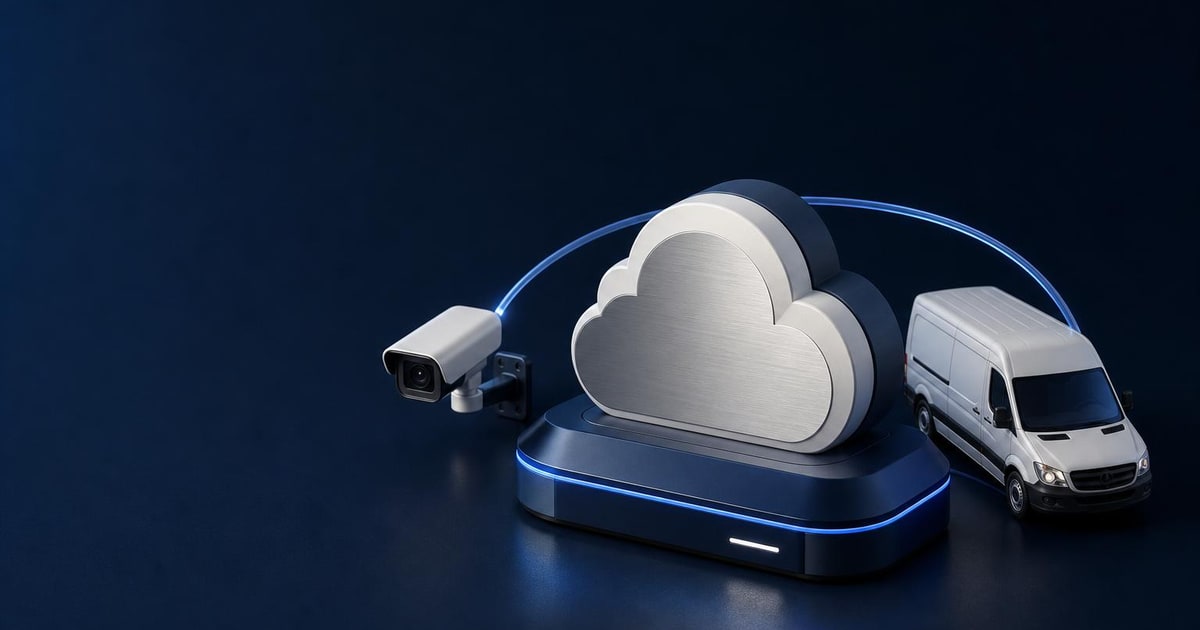
A central security console sits beside a compact vehicle and security camera, linked by a blue connection arc.

How Verkada fleet security could help UAE operators

For a UAE retailer, warehouse operator or delivery business, the attraction is consolidation. Cameras, vehicle events, access points, alarms, audio and environmental devices can be managed in the same Command environment rather than through separate vendor portals and local consoles.

That matters most when a business has several branches, a central security team or vehicles moving between sites. A manager could investigate a delivery dispute using vehicle footage and location, review a blocked-door alert at a warehouse, and check a loss-prevention event in a shop without switching systems. The platform also adds alerts for wrong-way driving, container number tracking, concealment and grab-and-run incidents.

There are limits. Verkada’s announcement does not publish UAE pricing, installation costs, telecom requirements, storage terms or local compliance guidance. It also does not establish that every existing camera, speaker, vehicle system or access device will work with the new features. Those points need to be confirmed during a technical assessment.

A UAE owner should also treat vehicle cameras and employee monitoring as a governance project, not just a hardware purchase. Decide who may view footage, how long records are retained, which events create an alert and how drivers or visitors are informed. Take local legal and privacy advice before deployment, particularly where passengers, employees or third parties may be recorded.
How to pilot Verkada fleet security across sites

Suppose a retailer has three branches, one warehouse and a small delivery fleet. The sensible first step is not to replace every device. Map the incidents that cost time or money today: missing stock, disputed deliveries, blocked exits, repeated alarm calls or cameras that go offline without anyone noticing.

Then choose one site and a limited vehicle group. Record the current process for each incident, including who investigates it and how long that takes. Test whether the new platform can find the relevant footage, location or device status without manual work across several systems.

A useful pilot checklist is:

Do not add Catalyst simply because an AI connection is available. Start with one read-only workflow that removes a clear manual task, such as reporting an offline sensor. If the workflow produces noise or cannot be audited, leave it out.

For the stock, accounts and operational systems around a retail business, the separate question is what should sit in the ERP rather than the security platform. This guide to what a small UAE retail business should look for in an ERP is a useful starting point.

  • —Select one high-value site and a defined vehicle group
  • —Confirm camera, gateway, network and access-control compatibility
  • —Set viewing permissions and retention rules before installation
  • —Test alerts against real operating conditions and false alarms
  • —Measure investigation time, missed events and staff workload

When Verkada fleet security makes business sense

The case is strongest for operators already dealing with fragmented systems. A central team managing many locations may gain more from a shared search, alert and device view than a single small shop would. The benefit is operational consistency: the same event categories, permissions and investigation process can be applied across sites.

The case is weaker when a business has one location, few vehicles and a working camera system that staff already understand. A cloud platform can add subscription, networking, installation and training commitments. If the current problem is simply poor camera positioning or no written incident process, new hardware will not solve it.

The sensible owner therefore starts with the incident map, not the product catalogue. If the pilot shows faster investigations and fewer missed events, expand by site or use case. If it does not, keep the existing setup and fix the process instead.

Paknology has a commercial interest if this review leads to an ERP and automation project, but it does not sell Verkada hardware. A cheaper or simpler option may be better where one site, a small fleet or an existing camera system can be managed reliably without a new platform.

Next steps for a Verkada fleet security pilot

List the sites, vehicles, devices and recurring incidents before speaking to a vendor. If the wider problem is disconnected business systems rather than physical security alone, start with an ERP and automation assessment and keep the Verkada pilot narrowly defined.

Ready to launch, automate and scale?

Book a free consultation and get a clear roadmap — from company formation to a fully automated digital operation.