News2026-11-094 min read

Ziina’s CBUAE licence: payment options for UAE merchants

Ziina’s new CBUAE authorisations cover merchant acquiring, payment aggregation, transfers and exchange activity. Here is what changes for UAE businesses, and what does not.

Ziina’s CBUAE licence: payment options for UAE merchants

What UAE merchants can do with Ziina’s CBUAE licence

Ziina can now offer UAE merchants a broader regulated payments service through one platform. Its CBUAE Retail Payment Services Category III licence covers merchant acquiring, payment aggregation and domestic fund transfers. An exchange authorisation under its existing Stored Value Facility licence covers international transfers through digital channels. (thepaypers.com)

For a merchant, that means payment links, QR payments, Tap-to-Pay and an online gateway sit within a more complete regulated payments proposition. It does not mean every business should replace its current bank, card terminal or payment gateway.

The useful change is choice: one local provider may cover more of the payment journey.

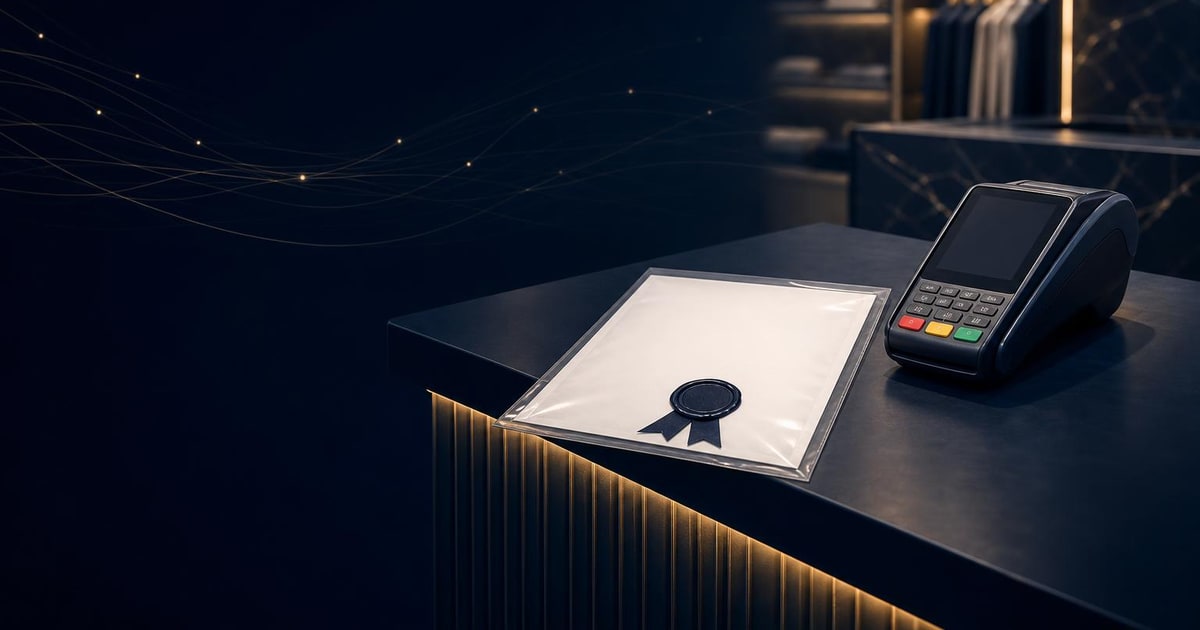
A blank official authorisation document sits beside a merchant payment terminal on a shop counter.

Which Ziina payment services the CBUAE licences cover

Ziina received its Stored Value Facility licence in June 2024. The new Category III licence extends its regulated activities into merchant acceptance and domestic transfers. The separate exchange authorisation allows international money transfers through digital channels, including through the Ziina app. (thepaypers.com)

The merchant tools named in the announcement are practical rather than theoretical:

Ziina’s own guidance says business users can create a payment link, show a QR code, accept contactless payments on a compatible iPhone or Android device, or connect a gateway to a website or app. Customers can pay by card, Apple Pay or Google Pay, subject to eligibility, device support and the provider’s current terms. (ziina.com)

  • —Payment links for remote orders
  • —QR payments for counters, stalls and events
  • —Tap-to-Pay on supported phones
  • —An online payment gateway for websites and apps

How Ziina’s licence changes payments for UAE businesses

The clearest benefit is consolidation. A small retailer, consultant or pop-up seller may be able to use one provider for a payment request sent over WhatsApp, a QR code displayed at the counter and Tap-to-Pay during a face-to-face sale. An online seller can also consider the gateway instead of arranging a separate payment tool for its website.

Take a simple example. A home bakery receives five AED 300 orders through Instagram, takes three AED 250 payments at a weekend market and processes two AED 500 website orders. That is AED 3,500 in sales across three sales situations. The operational question is whether one dashboard and settlement flow makes reconciliation easier than managing separate tools. The commercial cost still depends on Ziina’s current transaction pricing, payment method, card type, currency and account terms. Businesses should check the latest fee schedule rather than rely on an old quote. (ziina.com)

The licence also matters for confidence and due diligence. The CBUAE rulebook defines Category III as covering payment account issuance, payment instrument issuance, merchant acquiring, payment aggregation and domestic fund transfers. The authorisation is therefore broader than a simple wallet feature. (rulebook.centralbank.ae)

How UAE businesses can test Ziina payments

Start with a payment map, not a supplier decision. Write down how customers pay today, where each payment is recorded, how settlements reach the bank and where refunds or disputes are handled.

Then test one narrow use case:

Ask for the current pricing structure, settlement timing, transaction limits, refund process, supported devices and integration requirements. Confirm that the business activity and documentation match the provider’s onboarding requirements. Do not assume a regulated provider removes the need for your own invoicing, bookkeeping, VAT records or customer-service process.

If the business already has a reliable acquiring bank, terminal estate and gateway, there may be no reason to change. The sensible move could be to keep the existing setup and use Ziina only for a specific gap, such as pop-up selling or payment collection by link.

For businesses that need a website, Paknology’s website service can help build the digital sales layer, while ERP and automation support may help keep orders, payments and records aligned. A restaurant should separately assess whether its POS system needs to connect to the chosen payment workflow.

  • —Use a payment link for remote orders
  • —Use QR at a temporary sales counter
  • —Test Tap-to-Pay on the phones staff already carry
  • —Review the gateway only if website checkout is a real need
When Paknology fits your payment setup

Paknology has a commercial interest where this decision leads to a website, mobile app, ERP or restaurant POS project. It does not issue payment licences, process merchant funds or set Ziina’s commercial terms.

A cheaper or simpler option may be better if your current terminal already works, your sales volume is low, or you only need a basic bank payment method. In that case, keep the existing arrangement and review Ziina when a specific operational problem appears.

The next step is to document one payment journey and compare the current process with a small Ziina test. If the gap is your website, review the website service; if there is no clear gap, doing nothing is a reasonable business decision.

Ready to launch, automate and scale?

Book a free consultation and get a clear roadmap — from company formation to a fully automated digital operation.