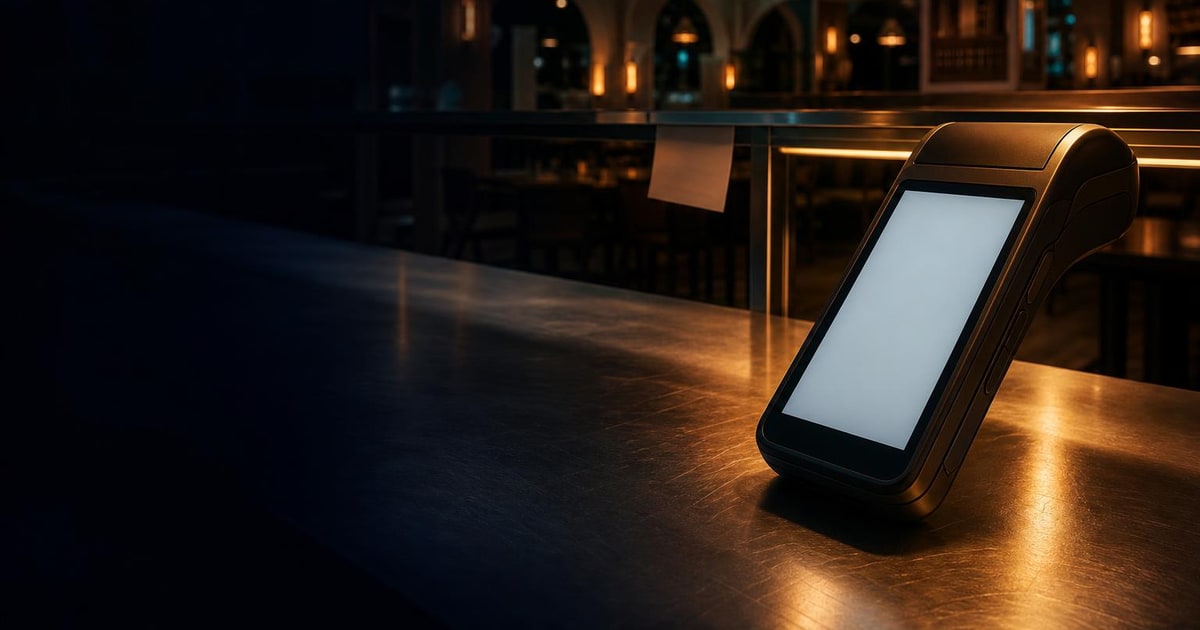
PAR Handheld UAE: restaurant POS for orders and payments
PAR Handheld puts ordering, payment and loyalty on the same POS device. Here is what UAE restaurant owners should test before considering it for table or queue service.

PAR Handheld is not simply a payment terminal or a waiter tablet. PAR says it is the full PAR POS on a portable Verifone Victa device, bringing order capture, payment and loyalty into the same workflow as the fixed terminal. Orders can then appear in the terminal, kitchen display system and reporting tools. (partech.com)
For a UAE restaurant, that could reduce the hand-offs between a handheld ordering device, a separate card machine and the main till. It does not automatically make the product suitable here. The sensible test is whether PAR can support your payment acquirer, tax workflow, network setup, menus and local service requirements.
The useful change is not mobility by itself. It is keeping the mobile transaction inside the same POS record.

PAR announced that Handheld was in pilot before a planned October 6 launch. The company said it was being tested with a national coffee brand operating more than 1,000 locations, and that the product was available to PAR POS customers in quick service, fast casual and casual dining. (partech.com)
The device is designed for the point where service happens. In a queue, a team member could take an order before the fixed till. In a table-service setting, staff could stay with the guest rather than returning to a counter to complete the transaction. PAR’s demonstration showed an order being taken, payment being tapped, a loyalty reward being redeemed and the result appearing across the fixed terminal, KDS and reporting.
That is different from adding another tablet to an existing restaurant stack. PAR positions Handheld as the same POS environment, using the same menus, payments, loyalty, reporting and management tools as the terminal behind the counter. It pairs with PAR Ordering, PAR Pay and PAR Punchh. (partech.com)
The main comparison is with the familiar split setup: one system for orders, another device for card payments, a fixed till for final billing and separate screens for kitchen or loyalty work. That arrangement can function, but every extra hand-off creates another place for a modifier, discount, payment status or loyalty redemption to go wrong.
A connected handheld could be useful where queues build at peak periods, where staff lose time walking between tables and the till, or where managers want mobile orders to feed the same kitchen and reporting process. It may be less valuable for a small counter-service outlet with short queues, limited menu changes and one well-placed terminal.
For UAE deployment, ask PAR or its local implementation partner to demonstrate five points using your own menu:
Those checks matter more than the word “handheld”. A UAE restaurant POS should continue working when the internet fails, handle VAT at line level and hold data in a form that can support structured invoices when the relevant e-invoicing phase applies. (paknology.com)
PAR has not published a UAE price in the announcement. The cost will need to be treated as a project rather than a single device price. Ask for the hardware, POS subscription, payment services, integration, support, installation, training and replacement-device terms as separate lines.
Then compare the cost with the process you have today. If one handheld removes a separate ordering tablet and reduces manual payment steps, the benefit may come from fewer devices and cleaner operations. If it simply adds another endpoint while the old systems remain, the business may be paying for duplication.
The right comparison is therefore not “tablet versus terminal”. It is “one connected workflow versus several systems that staff must reconcile”.
Do not replace a functioning POS because a portable device is fashionable. Start with one outlet, one service period and one measurable problem, such as queue length, order-entry errors, table-service delays or loyalty redemption friction.
Use a short proof-of-fit session with your actual menu and payment journey. Confirm who supports the device in the UAE, where transaction data is hosted, how updates are handled, what happens during a network outage and whether the restaurant can export the records needed by its accountant.
Paknology has a commercial interest here because it builds restaurant POS and back-office systems, including POS, KDS, recipe-level inventory and multi-branch control. Our restaurant POS service is a fit when a restaurant needs a system designed around its operation, but a standard off-the-shelf product may serve a straightforward business better and cost less. (paknology.com)
If PAR can answer the UAE payment, VAT, support and integration questions, ask for a controlled pilot rather than a full rollout. If your real problem is only a slow queue at one counter, a simpler ordering or payment change may be the better answer.
Sources
Book a free consultation and get a clear roadmap — from company formation to a fully automated digital operation.