Technology2026-09-245 min read

Pilot Navigator for UAE Restaurants: Faster POS Decisions

Pilot’s Navigator lets restaurant operators question POS data in plain language. For UAE owners, the useful lesson is how existing sales, purchasing and menu data could support quicker decisions.

Pilot Navigator for UAE Restaurants: Faster POS Decisions

How AI turns restaurant POS data into answers

Pilot has launched Navigator, an AI layer for its restaurant POS platform. It allows operators to ask questions in everyday language and receive answers from their own restaurant data, rather than building reports or searching through spreadsheets. The launch was announced in South Africa on 17 September 2026, and Navigator is available to all Pilot clients. (pilot.co.za)

The questions it is designed to answer are practical. An operator can look for sales trends, compare supplier pricing, identify purchasing anomalies, or see which menu items are becoming less profitable as ingredient costs change. Pilot says complex analysis across millions of data lines can be answered in seconds. (pilot.co.za)

For a UAE restaurant, this is not a new POS system to install simply because the word AI appears in the announcement. It is a model for what an intelligence layer could add to a POS system already collecting sales, purchasing and menu information.

The useful product is not the chatbot. It is the shorter distance between a trading question and a decision.

A restaurant operator’s hand presses a blank area on a POS touchscreen at a softly lit service counter.
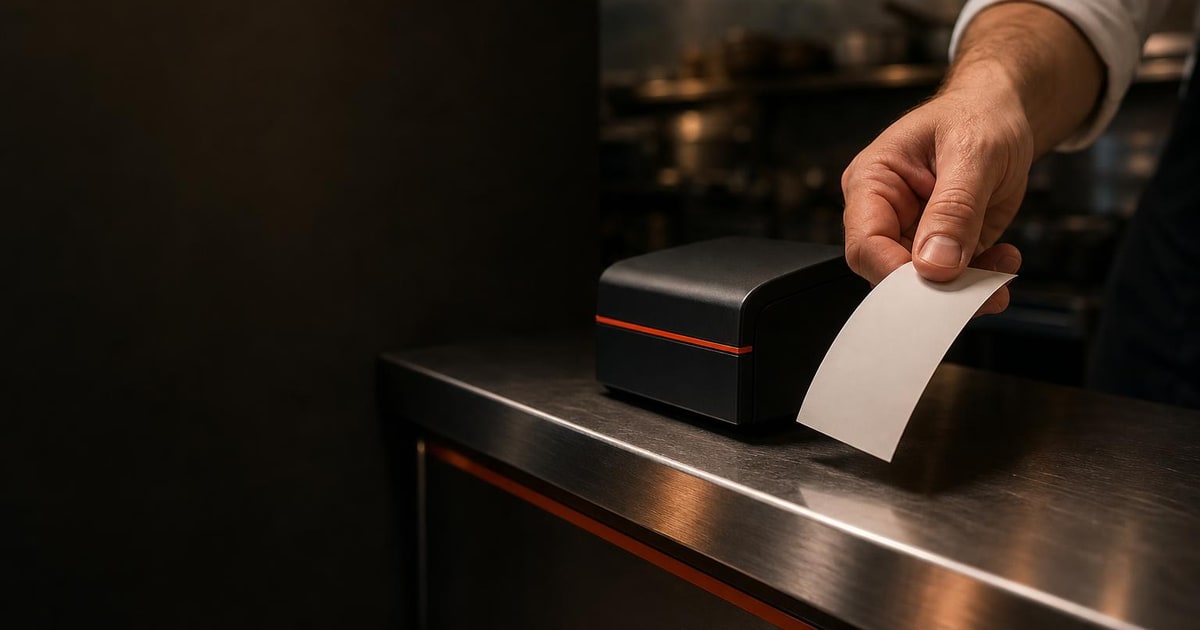
A blank order ticket is being guided from a POS printer onto a stainless-steel restaurant pass.

How UAE operators can use POS data for margins and purchasing

The immediate change is the way an owner might inspect performance. Instead of asking a manager to prepare a report, the owner could ask which dishes have lost margin, whether a supplier’s latest prices have changed the economics of a menu item, or whether purchasing looks unusual for a particular site or period.

That matters most when the business has several locations, a broad menu, frequent supplier changes or a purchasing team that is already spending time reconciling information. It could also help an independent restaurant where the owner is making decisions personally but does not have time to work through every report.

The launch example is specific. During beta testing, Dean Teubes of The Palms Plett and Club Haus used Navigator to identify supplier pricing anomalies and unexpected increases. The business queried those discrepancies with suppliers and secured credits. The point is not that every AI query will produce a credit. The point is that a data signal became a commercial conversation. (pilot.co.za)

A UAE operator should still check what the existing system can actually see. If sales are in the POS but recipes, purchase orders and supplier invoices are elsewhere, an AI layer may only answer part of the question. Before choosing a new system, compare the data sources and workflows, not just the interface. Our guide to what a restaurant POS in Dubai should be able to do is a useful starting point.

How to assess AI restaurant POS data

Start with three questions the business already wants answered. For example: which menu items are losing margin, which supplier prices changed without attention, and which products are being bought more quickly than sales justify.

Then trace where the answer currently lives. Write down whether each data point comes from the POS, a stock module, an invoice, a spreadsheet or a manager’s own knowledge. This exposes the real issue. It may be a lack of analytics, or it may be incomplete or inconsistent data.

Next, test the answer against a known period. If the business already knows that a supplier changed a price or that a dish became less profitable, see whether the system finds the same result. A useful tool should explain the result clearly enough for an owner to check it.

For UAE operators reviewing systems, this is also where the wider restaurant POS service becomes relevant. The sensible requirement is not “AI” on its own. It is a connected flow from orders and payments to stock, purchasing and management information.

Pilot’s announcement describes Navigator as an intelligence layer across POS, payments, purchasing and performance tools. That integrated approach is the part worth studying, even though the announcement itself concerns Pilot’s South African platform rather than a UAE rollout. (pilot.co.za)

  • —Ask for the data sources the system can connect
  • —Test one known margin change
  • —Check how supplier prices are recorded
  • —Confirm who can see sensitive figures
When a small restaurant needs AI POS analytics

A small restaurant with one site and straightforward purchasing may not need a separate AI layer. Existing POS reports, a well-maintained stock process and a simple weekly margin review may be enough. Paying for a more advanced system would add complexity if nobody has time to use it.

A growing group is different. If managers are repeatedly exporting data, checking supplier invoices by hand and arguing about which dishes are profitable, the cost is already being paid in staff time and delayed decisions. In that case, an operator should ask current POS suppliers whether they can provide connected purchasing and margin analysis before replacing the whole system.

The practical lesson from Navigator is therefore narrow but useful: restaurant technology is moving towards systems that answer operational questions, not only systems that display historical totals. The business benefit depends on clean data, connected workflows and someone responsible for acting on the answer.

How Paknology helps UAE restaurants choose POS software

Paknology has a commercial interest here because it provides restaurant POS and ERP and automation services. We can help a UAE restaurant review its operational software, but a cheaper or simpler option may suit a small business that only needs reliable sales reports and disciplined stock checks.

If your restaurant is comparing POS options, begin with the three questions you need answered every week and map the data behind them. Then review the restaurant POS service against those requirements rather than buying an AI feature for its own sake.

Ready to launch, automate and scale?

Book a free consultation and get a clear roadmap — from company formation to a fully automated digital operation.