Crunchtime Connected Kitchen: KDS, Waste and Inventory for UAE Groups
Crunchtime has linked KDS, prep, waste, inventory and performance data in one restaurant operations suite. Here is what that changes for UAE restaurant groups.

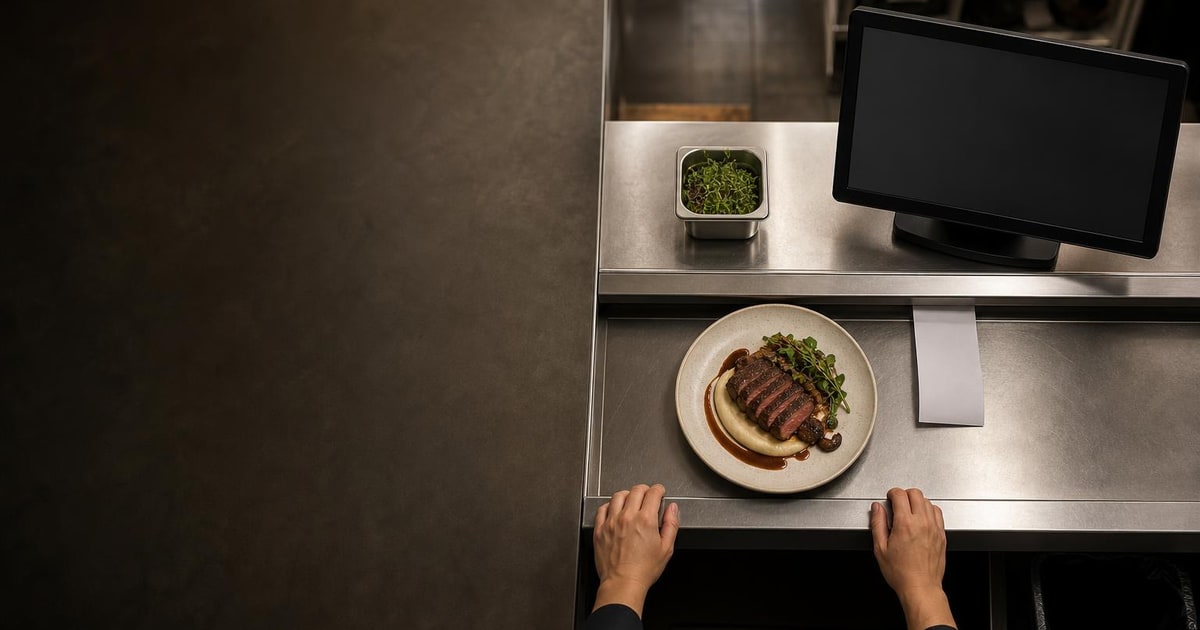
Crunchtime has made the kitchen display system more than an order screen. Its connected suite puts prep instructions, operational tasks and waste logging on the KDS, while linking that activity to inventory, labour, POS, service and reservation data. For a UAE restaurant group, the practical gain is fewer separate workflows and a clearer view of where a shift is losing time, stock or consistency.
The announcement came on 16 September 2026. Crunchtime says the launch connects Crunchtime Kitchen, Ops Execution and Inventory, building on its 2025 merger with QSR Automations. The company describes the KDS as a unified operational command centre rather than a display used only for incoming orders. Read Crunchtime's announcement.
The important change is not another screen. It is moving more of the work to the screen the kitchen already uses.

Tasks created in Ops Execution can appear beside incoming orders. Staff can view, complete and bump them without opening a separate application. Prep recommendations from Inventory can also appear on the KDS, using the company's AI forecasting to guide daily preparation.
Waste logging is the other important link. A team member can record waste directly on the KDS, and the entry updates inventory. That is intended to reduce the gap between what was thrown away during service and what the back office later thinks remains in stock.
Crunchtime also connects kitchen and reservation data to its Insights layer. The resulting view brings speed-of-service, ticket times, cook-time variance and reservation data alongside inventory, labour, POS and execution information. The company says its forecasting customers achieve 98-99% accuracy, although an owner should treat that as a vendor-reported performance claim and test it against their own sales history.
The implication is strongest for operators with several branches, several managers or several tools in each outlet. A kitchen may be following one prep sheet, a manager may be checking another task list, and inventory may be updated later from a separate device. Connecting those steps gives the group one operating flow to examine.
Consider a simple example. A branch is preparing for a busy evening. The forecast recommends a prep level. During service, a batch is discarded and logged on the KDS. The inventory record is updated, while the same operating picture can later be compared with sales, ticket times and labour data. The value is not that the system makes the decision automatically. It is that the decision and the result are recorded in the same workflow.
That can help a UAE group ask better questions: was the branch over-prepping, was demand misread, did a slow station create the waste, or did the team miss a task? The software does not remove the need for a strong manager. It reduces the manual stitching between systems.
Do not begin with the product name. Begin with the failure in the current operation.
For an outlet group already using separate systems, this is an integration and operating-design project, not simply a screen replacement. If the business has one branch, limited menu complexity and a team that already records waste accurately, the connected suite may add more process than value.
A UAE operator comparing options should also understand what the existing POS can already do. Paknology's restaurant POS service covers POS, KDS, recipe-level inventory, wastage, food-cost reporting and multi-branch control. Its own pricing is structured around a subscription per outlet, with optional hardware packages and a quotation based on the branches and requirements.
A sensible owner should not copy Crunchtime's stack because it is new. They should document one real service problem, measure it for a few weeks and then test whether connecting KDS, inventory, POS and execution data solves it without creating a heavier process for the kitchen.
If the main gap is fragmented restaurant software, review the restaurant POS workflow and compare it with the current setup. If a simple POS already handles the problem, keep it. If the operation needs recipe-level costing, KDS workflows and multi-branch control in one system, Paknology's restaurant POS service is the relevant place to scope it.
Paknology sells and implements restaurant POS and related business technology, so it has a commercial interest in identifying a software project. A cheaper or simpler POS may serve a standard single-outlet operation better. The right test is whether the connected workflow removes a measured problem, not whether it adds more features.
Sources
Book a free consultation and get a clear roadmap — from company formation to a fully automated digital operation.